Security in 2026 won't be defined by one new exploit class or a single breakout vendor category. It'll be defined by something more fundamental: the economics of security labor changing fast as agentic systems make "good enough execution" cheap and abundant.
Here are predictions from our team at Transilience AI .
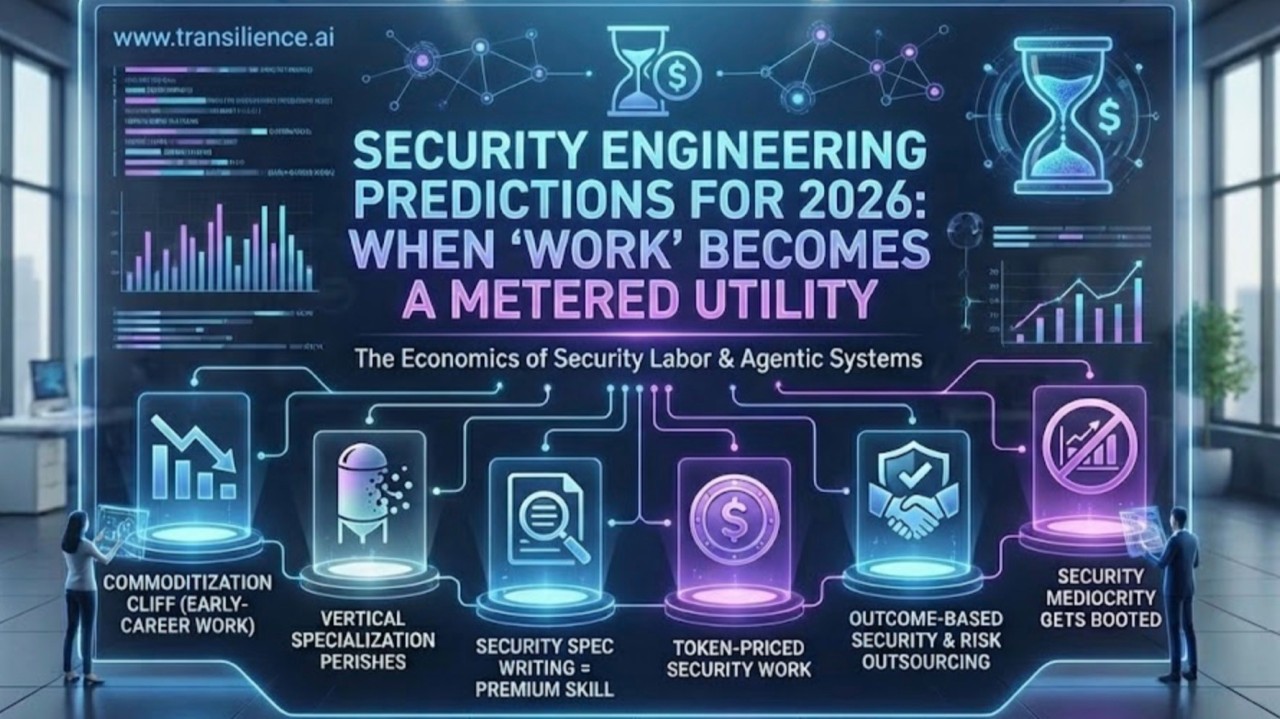
1) The Commoditization Cliff Gets Steeper (Especially for Early-Career Work)
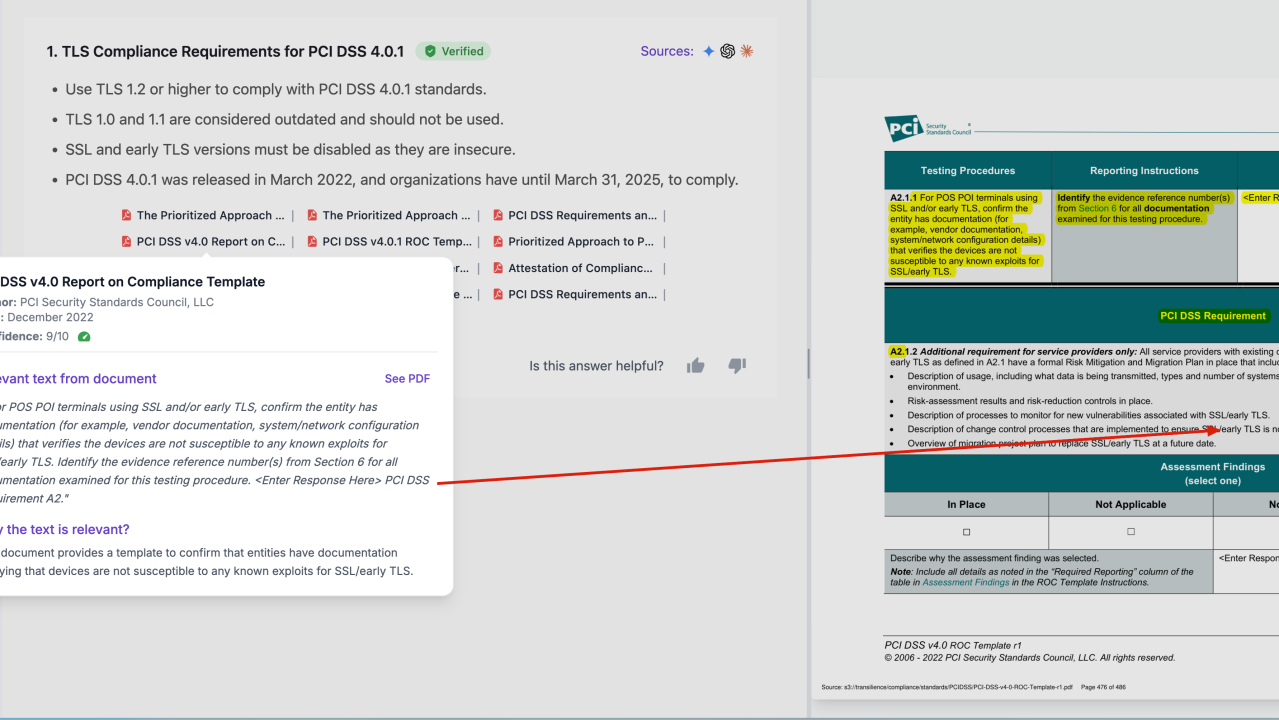
A lot of security work is still "repeatable execution": triage, basic detections, checklist hardening, evidence collection, template policy writing. In 2026, that layer keeps collapsing toward commodity pricing, especially the kind of work a human does with <5 years of experience.
This doesn't mean early-career security engineers are cooked. It means the market stops paying premium rates for tasks that can be generated quickly and verified reliably.
The new leverage is: define the problem clearly, set acceptance criteria, verify outcomes, and measure risk reduction.
2) Vertical Security Specialization Starts to Perish
We built careers and companies around silos: AppSec, cloud security, SOC, GRC, vuln management.
In 2026, "I only do X" becomes less defensible because agents that can do one job well will do other jobs well. Once you have a solid "security work engine" (read logs/config/code, follow procedures, write changes, validate outcomes), expanding into adjacent workflows becomes incremental.
Specialization starts to feel like "Python vs JS vs Rust" useful preferences, but not a durable moat.
The defensible edge shifts to:
- owning distribution (you own the buyer)
- owning feedback loops (you improve faster)
- owning trust boundaries (governable automation)
- proving outcomes (measurable risk reduction)
3) Security Spec Writing for Quality and Cost Becomes a Premium Skill
When execution becomes cheap, specification becomes expensive.
In 2026, the high-value security engineer is the one who can express "security quality" precisely:
- what "good" looks like
- what constraints matter
- what acceptance tests prove it
- what failure modes are unacceptable
And there's a new twist: specs will increasingly define cost, not just quality, because compute (and tokens) become first-class inputs.
People who can hit the desired security quality with the lowest waste least operational drag, least "analysis thrash," least compute become rare and valuable.
4) Token-Priced Security Work Shows Up as a Normal Conversation
We already meter security with log ingestion, events, and cloud spend.
In 2026, some security work gets scoped like:
I have a security problem. How many tokens do you want to spend on this?
It sounds goofy until you notice the inevitability: once machine labor is the execution layer, "effort" becomes a budget line item you can dial up and down.
Expect tiers like:
- Bronze: fast triage, shallow context
- Silver: deeper correlation across systems
- Gold: full investigation + remediation plan + evidence mapping
5) Outcome-Based Security Accelerates and CISOs Outsource Risk to Agents
Outcome-based models keep gaining ground: pay for results, not for tools.
That sets up the 2026 twist: CISOs start outsourcing risk to agents, not outsourcing "a platform."
Instead of "here's software, your team does the work," procurement trends toward:
- "keep us continuously audit-ready"
- "guarantee these control outcomes"
- "operate detection/response to an SLA"
- "deliver evidence on demand"
Put together: outcome-based contracting + agentic execution pulls responsibility outward. CISOs become portfolio managers of outsourced outcomes (and outsourced risk), buying measurable guarantees instead of dashboards.
6) Security Mediocrity Gets You Booted (The "Adequate" Era Ends)
Here's the cultural prediction: 2026 is when "adequate security work" stops being employable at scale.
Netflix has a famously blunt phrasing: "Adequate performance gets a generous severance package."
Security orgs won't copy Netflix verbatim, but the economics push the same direction: if LLMs and agents can produce "adequate" output instantly, humans are retained for what's excellent, contextual, and accountable.
Naval put the macro trend cleanly:
Robots and computers will own any clearly bounded job, skill or game. Humans should focus on creative work.
Security translation: if your work is clearly bounded (tickets, checklists, templated reports) and your output is mediocre, you're competing with something that gets cheaper every quarter.
Any strong predictions that we might have missed ?