We ran a simple but high-leverage loop on our own website.
We had traffic. We had engagement. But we did not have enough conversion into Get Access.
So we started with Vercel and PostHog, specifically movement analysis, bounce behavior, and CTA path drop-offs.
Claude ran that Vercel + PostHog analysis for us, surfaced where the friction was, and gave us a decision-ready diagnosis. We implemented the changes, shipped, and saw lead flow improve.
This post is the closed-loop story.
Start With Movement and Bounce Analysis
The first useful signal was not “pageviews.” It was movement and bounce.
Where did users stop? Where did they hesitate? Where did they exit before a Get Access click?
That was the continuous-loop problem statement for us:
- attention exists
- movement exists
- conversion leaks
- bounce holds too high
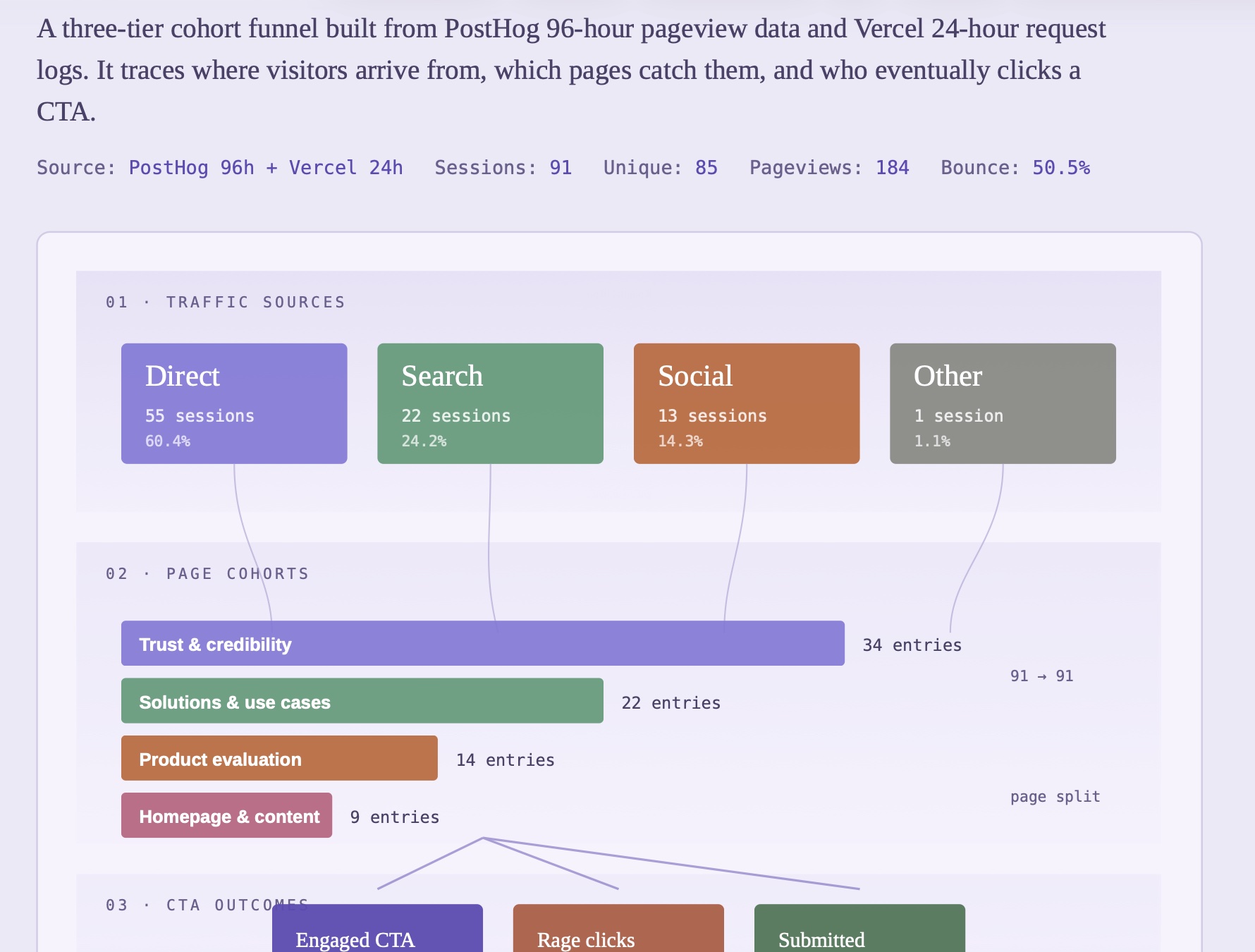
The Continuous Loop Problem
The homepage was doing some things right. People were reading core narrative sections and evaluating product substance.
But conversion was still leaking:
- Too much attention died in the top sections before
Get Access. - Trust proof was too late in the page.
- CTA language and CTA paths were inconsistent.
- Product-interest sections were informative, but not conversion-bridged.
This was not a traffic problem. It was a flow and decision-routing problem.
How the LLM Skills Closed the Loop
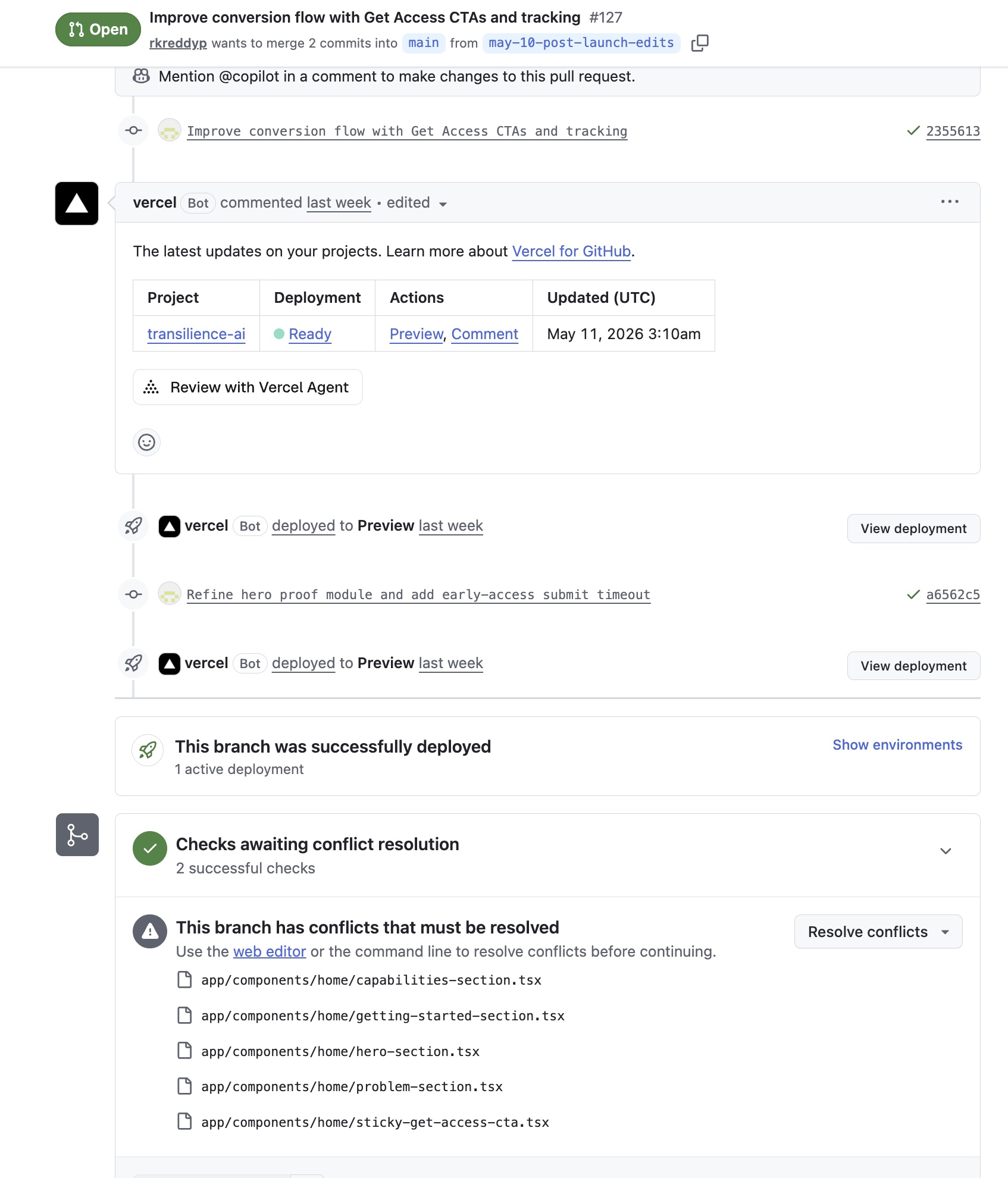
Our LLM skills were not just summarizing dashboards. They were executing a closed loop:
- Analyze logs and movement data from Vercel + PostHog.
- Detect where bounce and CTA handoff were failing.
- Automatically submit the issue/ticket for remediation.
- Propose and prepare the implementation change set.
- Submit the PR to remediate the conversion friction.
- Observe post-change behavior and evaluate if bounce and CTA clicks improved.
That gave us something rare: not generic advice, but a concrete execution path from signal to shipped change.
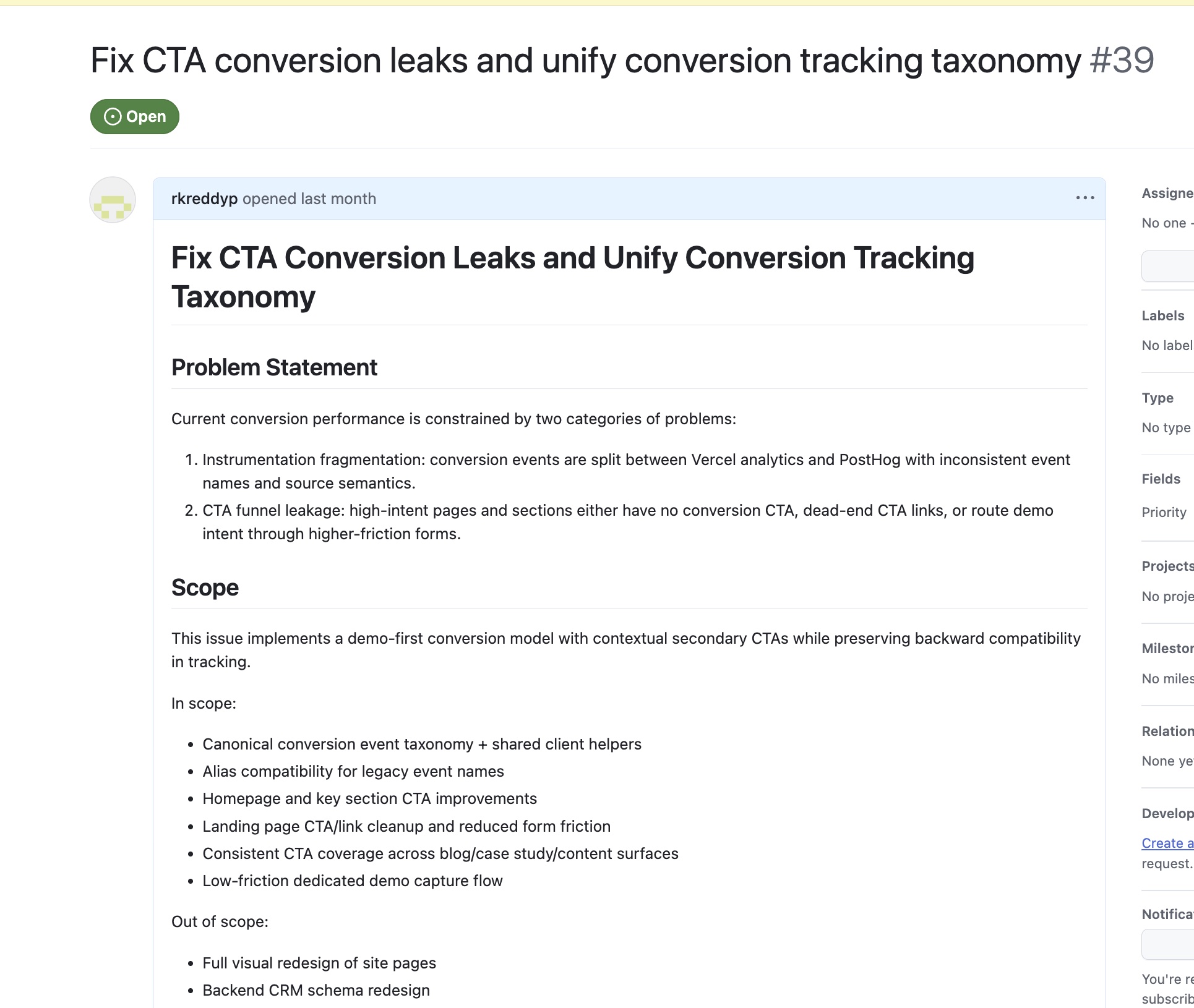
The Remediation Stage
We shipped changes in a focused sequence instead of redesigning everything:
- Made
Get Accessthe canonical action. - Added conversion bridges in high-dwell sections.
- Moved trust/proof higher in the journey.
- Simplified motion where it created friction.
- Tightened early-access copy and flow reliability.
- Standardized conversion event tracking.
Most importantly, we treated each section like a conversion decision point, not a static content block.
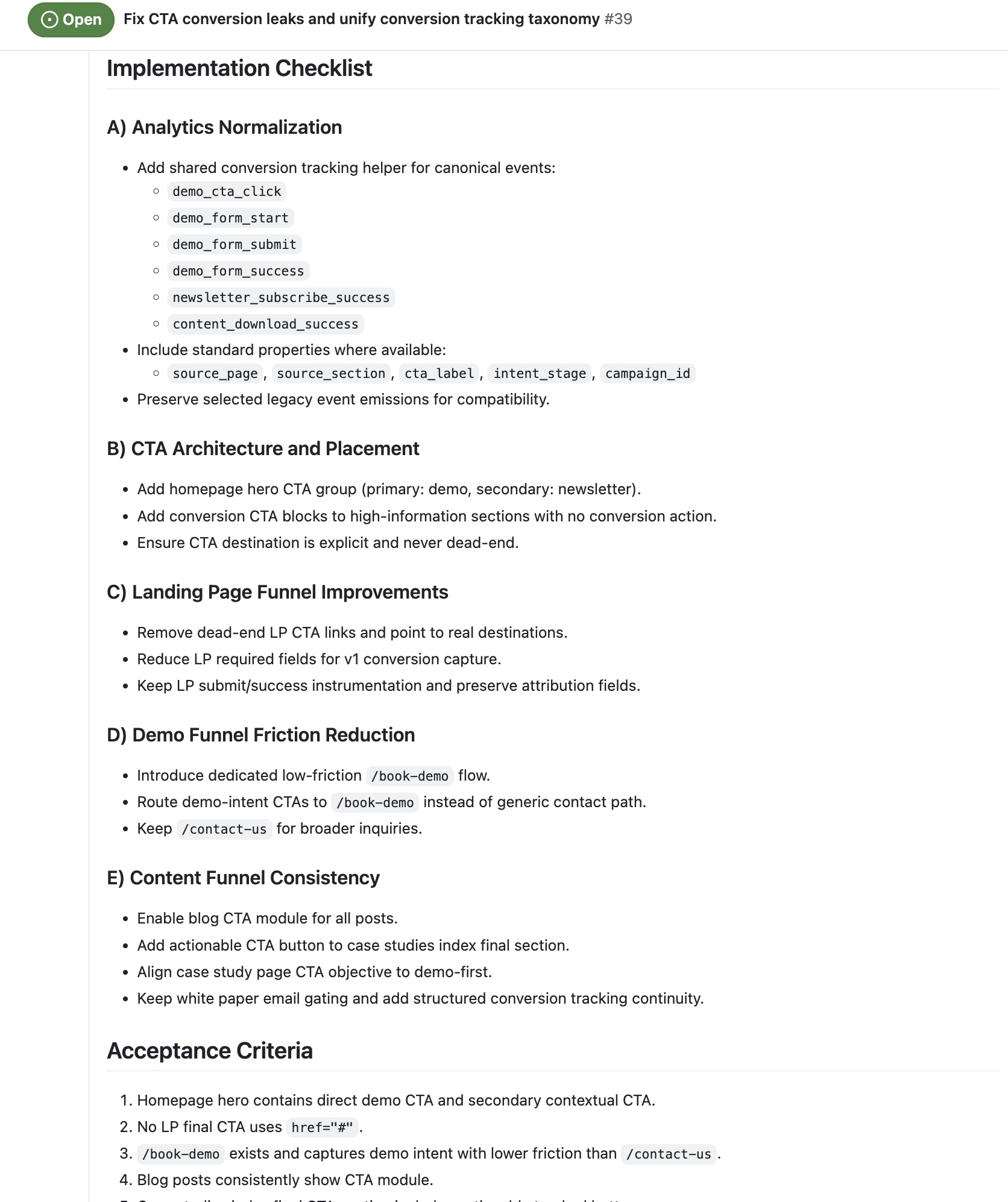
Why It Improved
The key was not “AI wrote copy.”
The key was closed-loop execution:
- AI did fast, broad diagnosis from Vercel and PostHog signals.
- The skills automated issue creation, remediation flow, and PR generation.
- Humans made final product and messaging judgments.
- We shipped specific changes quickly.
- We measured behavior again and iterated.
That loop improved bounce behavior and improved CTA click flow, which improved lead capture.
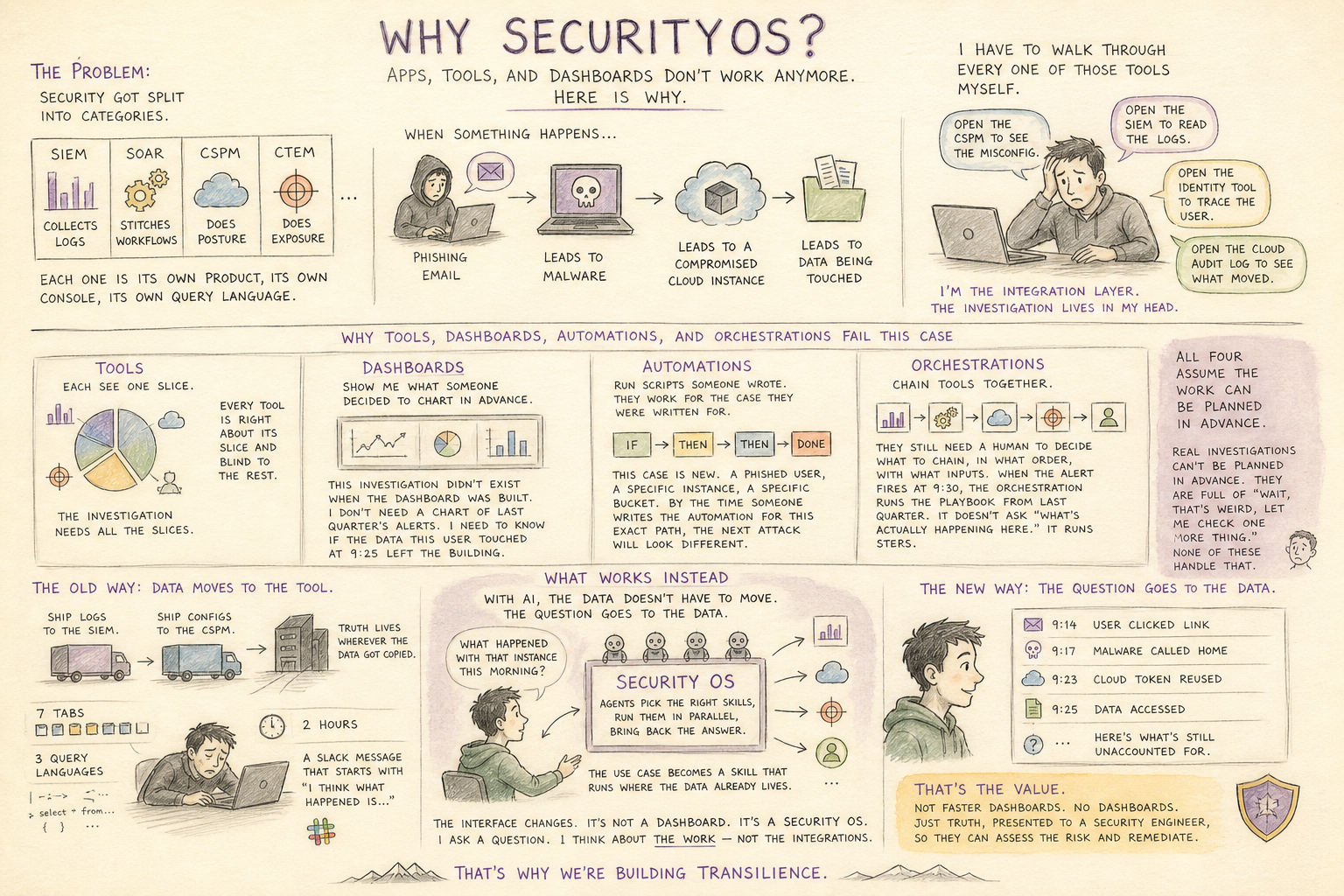
This is exactly how we think SecurityOS should work operationally too: signal, analysis, action, validation, repeat.
The Reusable Pattern
If you want to apply this model to your own site or funnel, use this sequence:
- Gather section-level behavior, not only page-level metrics.
- Run Vercel + PostHog analysis that outputs ranked friction points.
- Let LLM skills generate and route the issue automatically.
- Let LLM skills propose and submit remediation PRs.
- Re-measure bounce and CTA movement quickly and continue the loop.
The result for us was straightforward: fewer dead ends, clearer action paths, and more lead capture from the same attention.
That is the value of a real closed loop.