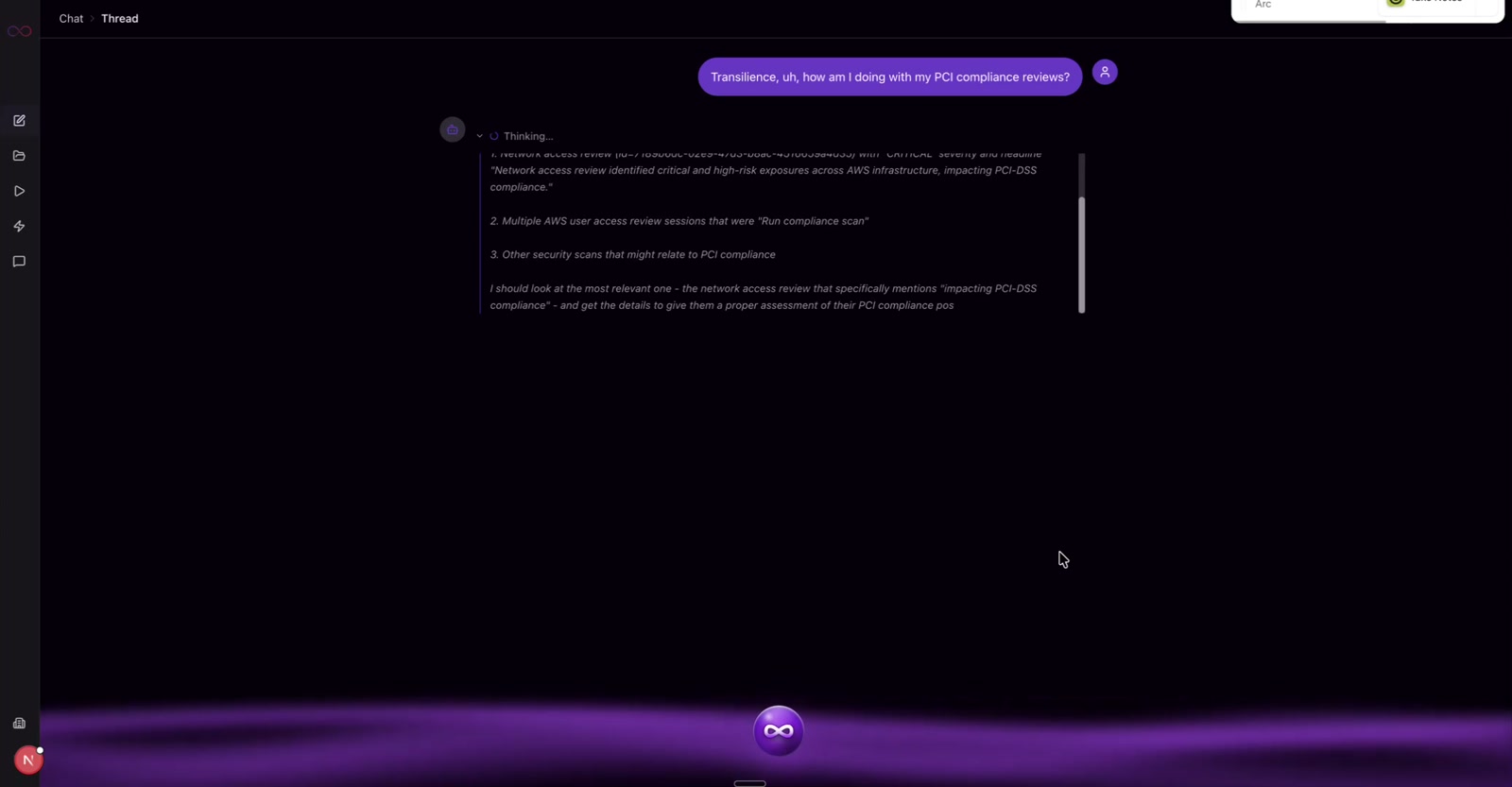
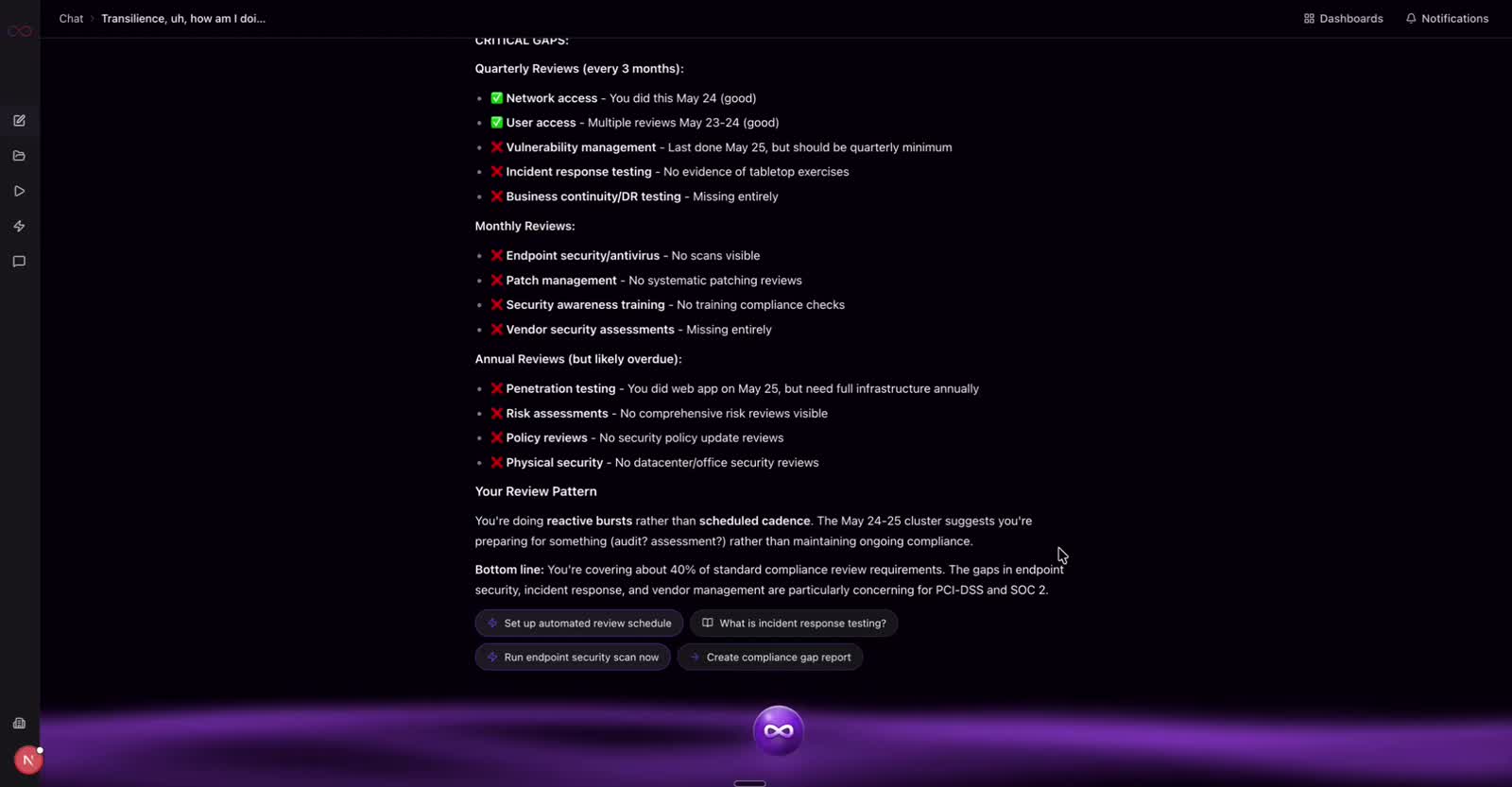
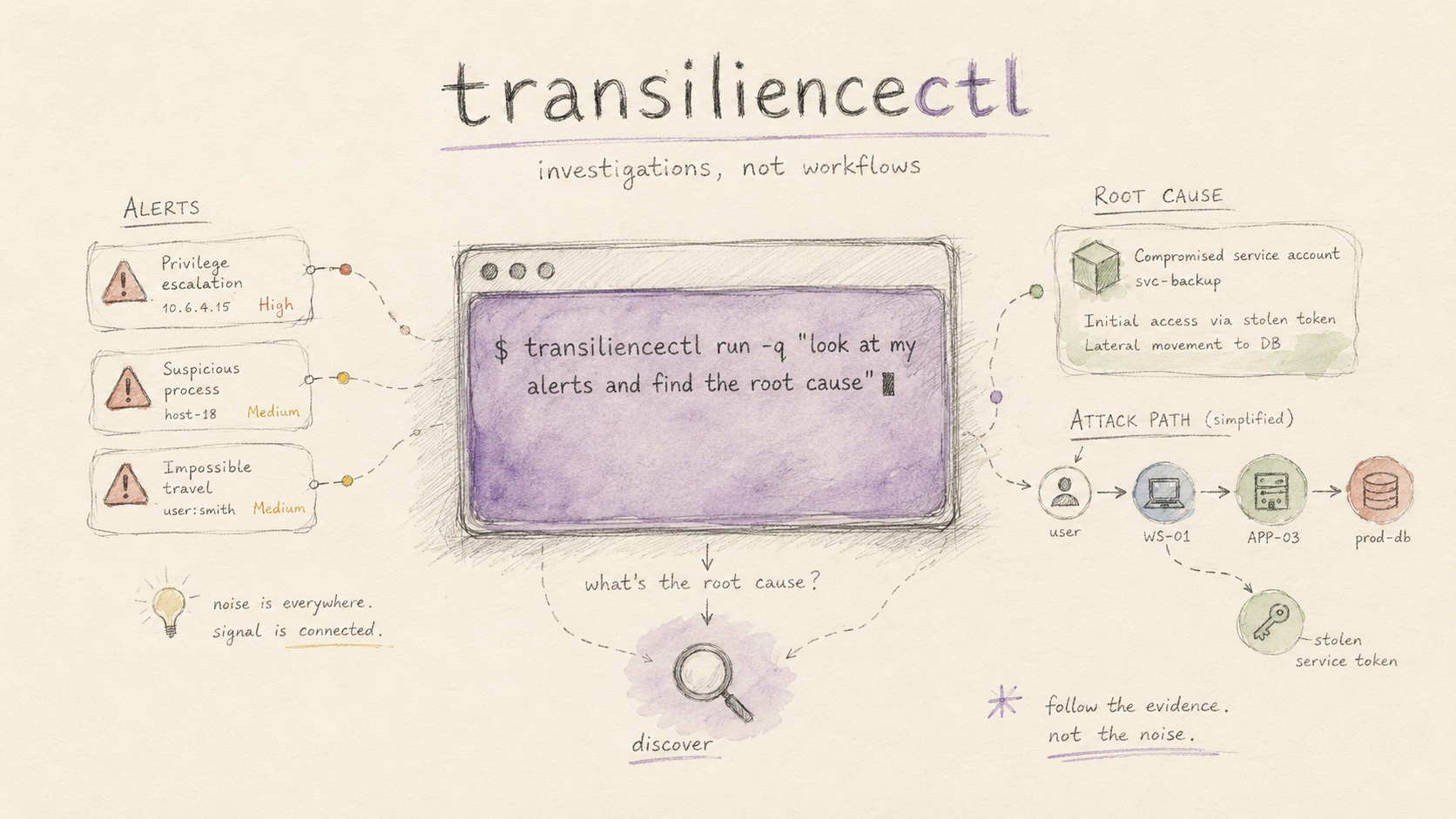
Compliance investigations often fail because context lives in too many systems. Voice chat compresses that gap by turning scattered evidence into a single operational conversation.
Analyst context and trigger
A PCI control exception is flagged during routine review. The analyst must determine if it is transient noise, stale evidence, or a real compliance gap requiring escalation.

Voice prompt sequence
The analyst asks Transilience AI to drive the evidence join:
"Map this PCI finding to the control family, affected systems, and last successful evidence snapshot."
"Who are the most relevant one or two owners to prioritize for fast closure?"
"Show me where current implementation diverges from expected control state."

System reasoning summary
Transilience AI correlates control metadata with live configuration, access activity, and historical audit evidence, then summarizes:
- What failed
- Why it failed
- Which controls and assets are in scope
- Which owners are most likely to unblock remediation

Actionable decision output
The analyst gets a direct action packet:
- Priority owners and rationale
- Required remediation tasks by control intent
- Evidence checklist for re-validation
This turns compliance work from documentation-heavy lookup into an execution loop.
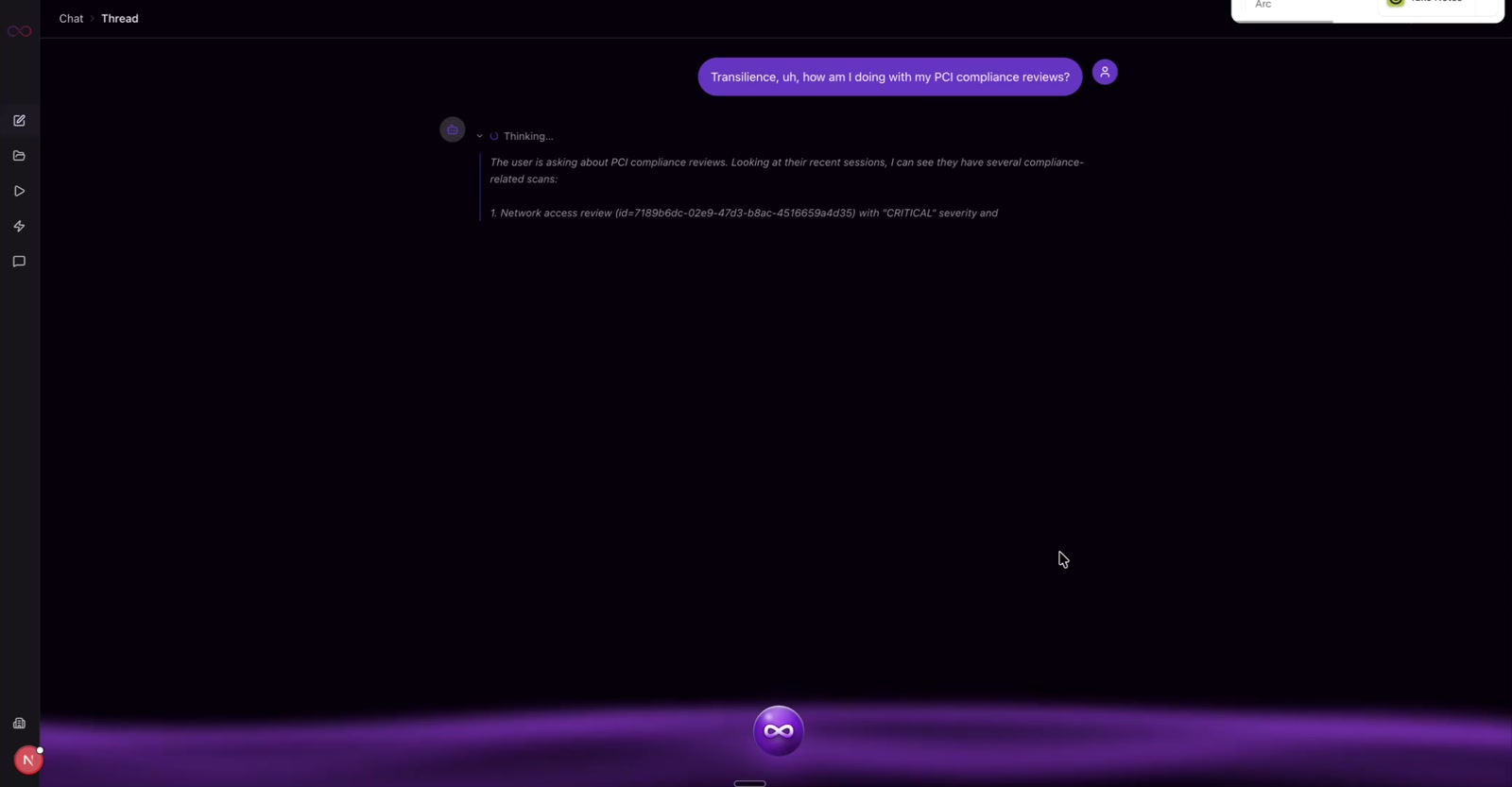
Follow-up loop
Through voice, the analyst closes the loop:
"Check if related complaints indicate user-facing impact from this control gap."
"Run a post-fix test and confirm if evidence now satisfies PCI expectations."
The result updates the control status and creates an auditable trail for the next review cycle.