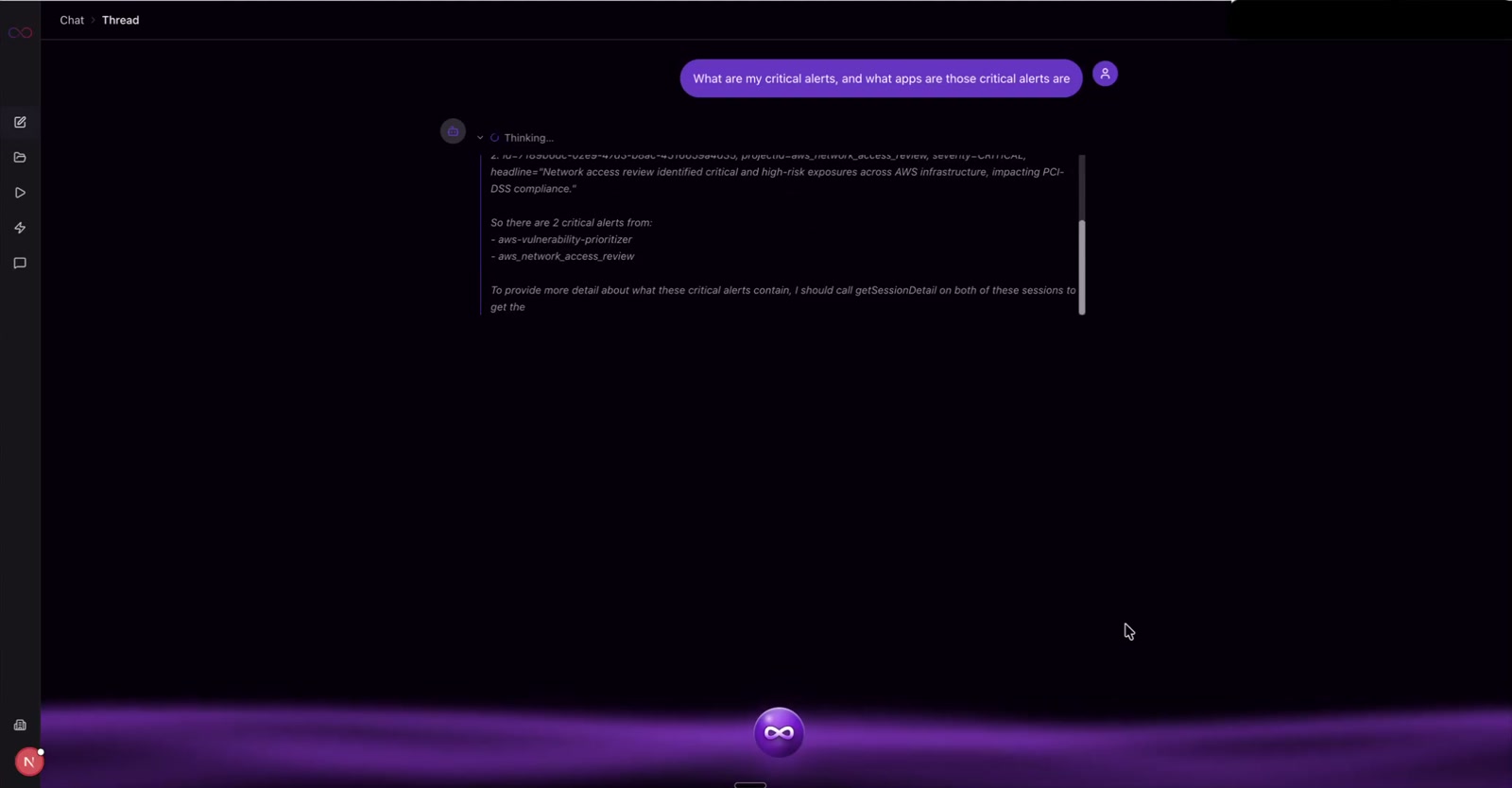
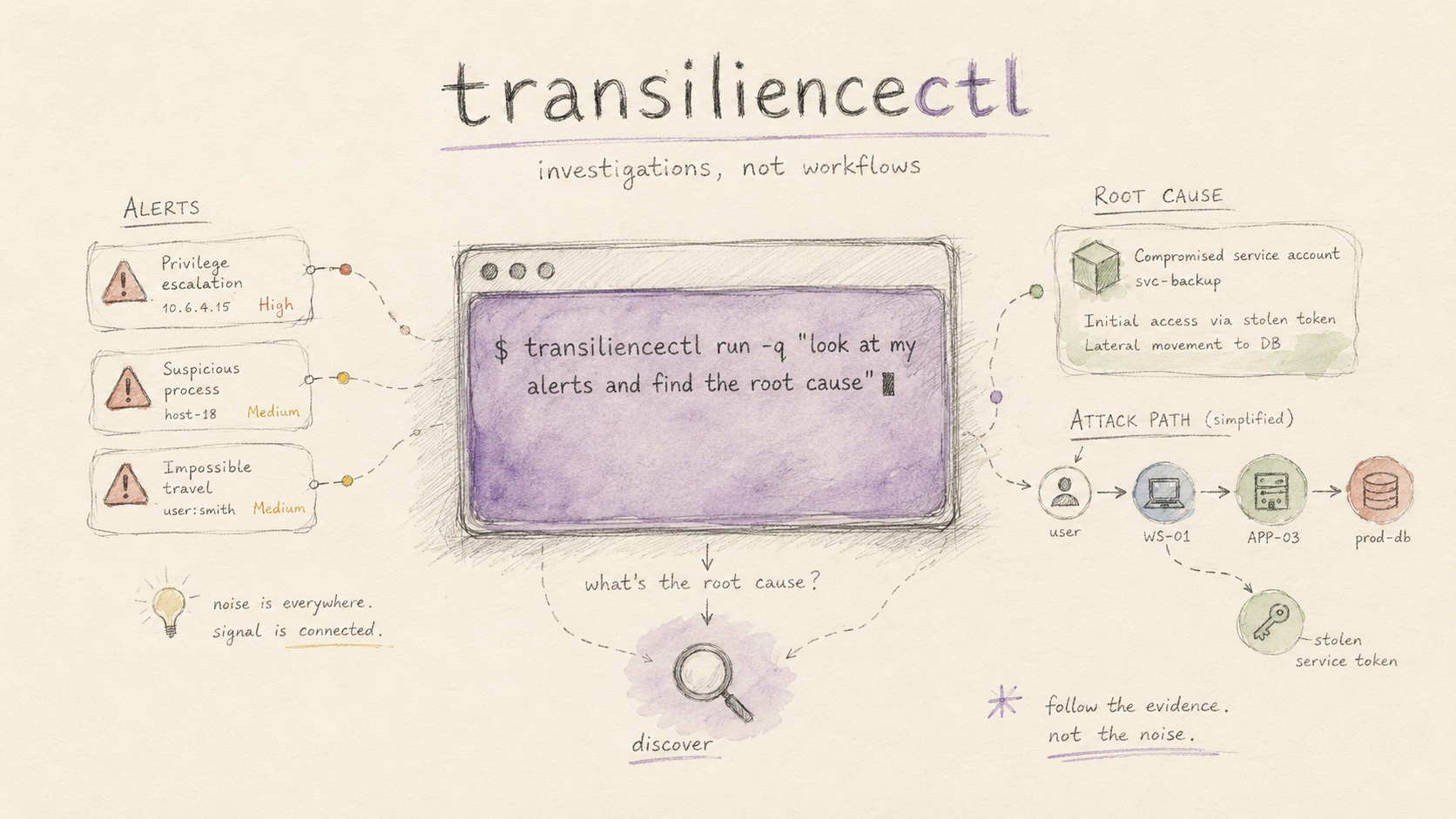
When multiple critical alerts land at once, speed is not just about response. It is about getting to a reliable root cause without bouncing between dashboards.
In this workflow, the analyst uses voice chat with Transilience AI as a second brain to correlate alerts, narrow likely causes, and move from noise to a concrete decision.
Analyst context and trigger
A burst of high-severity alerts hits across identity, endpoint, and cloud telemetry. The analyst needs to decide whether this is one incident with shared causality or unrelated spikes.
Voice prompt sequence
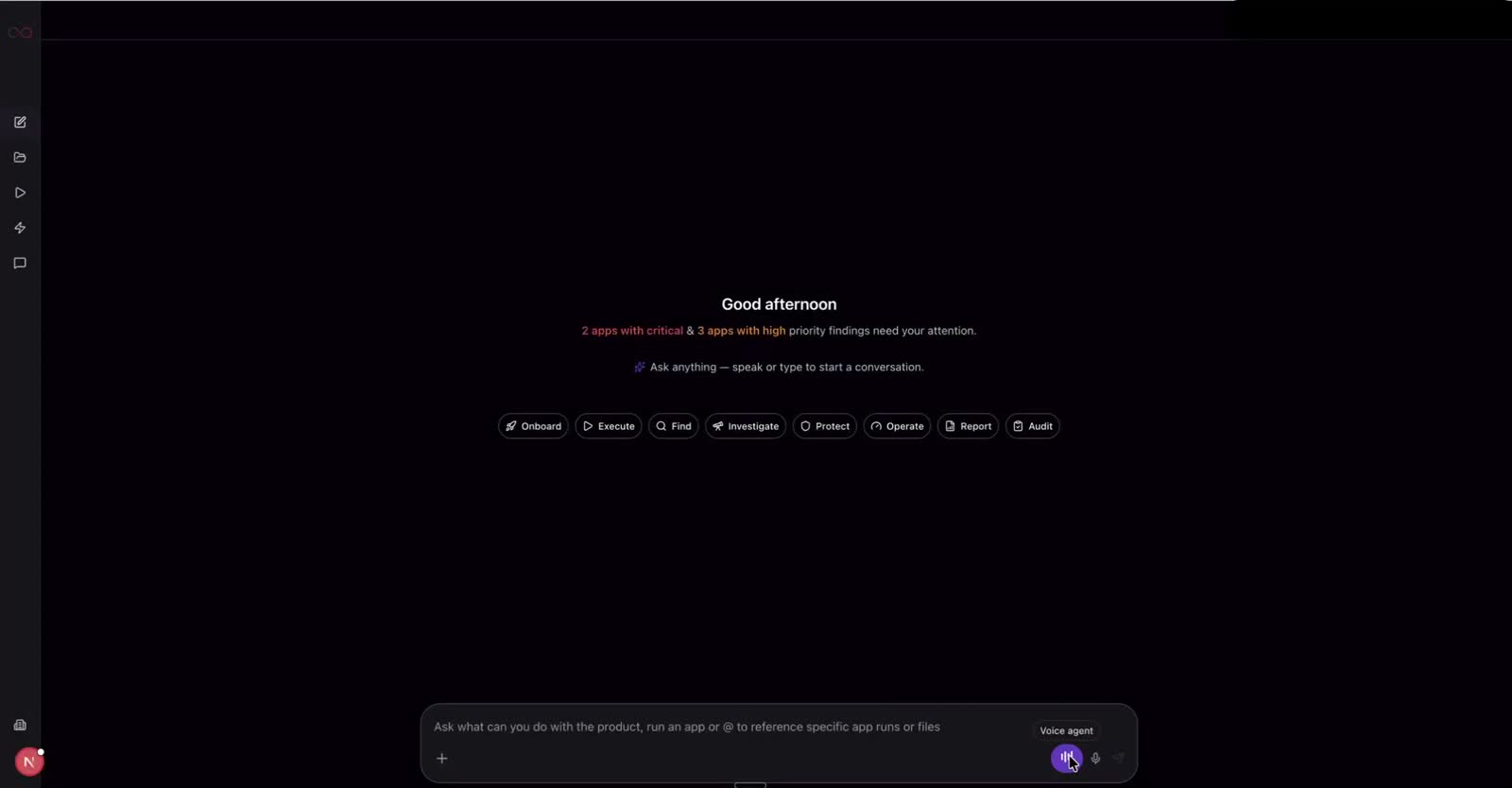
The analyst drives the investigation hands-free while staying in flow:
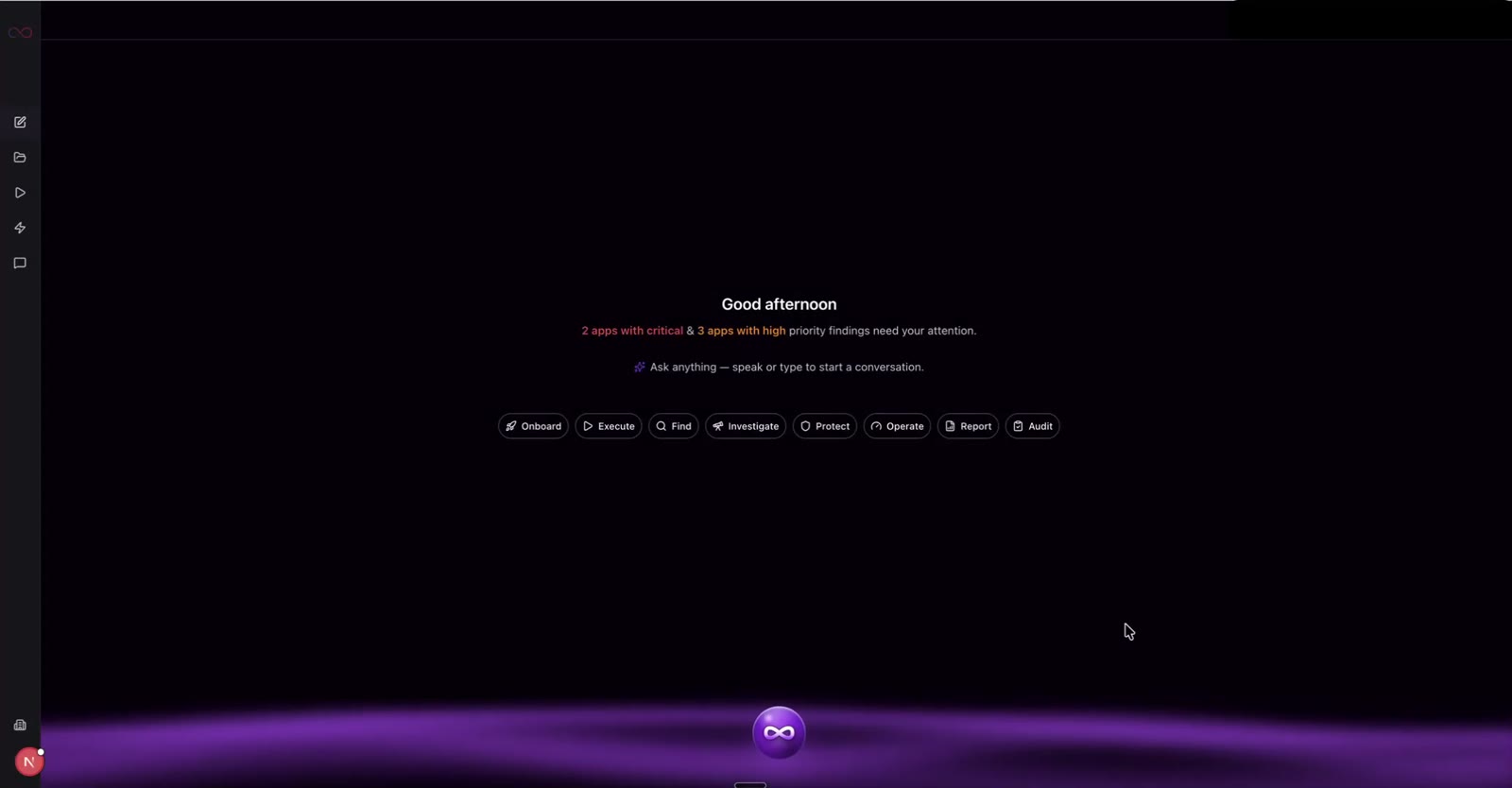
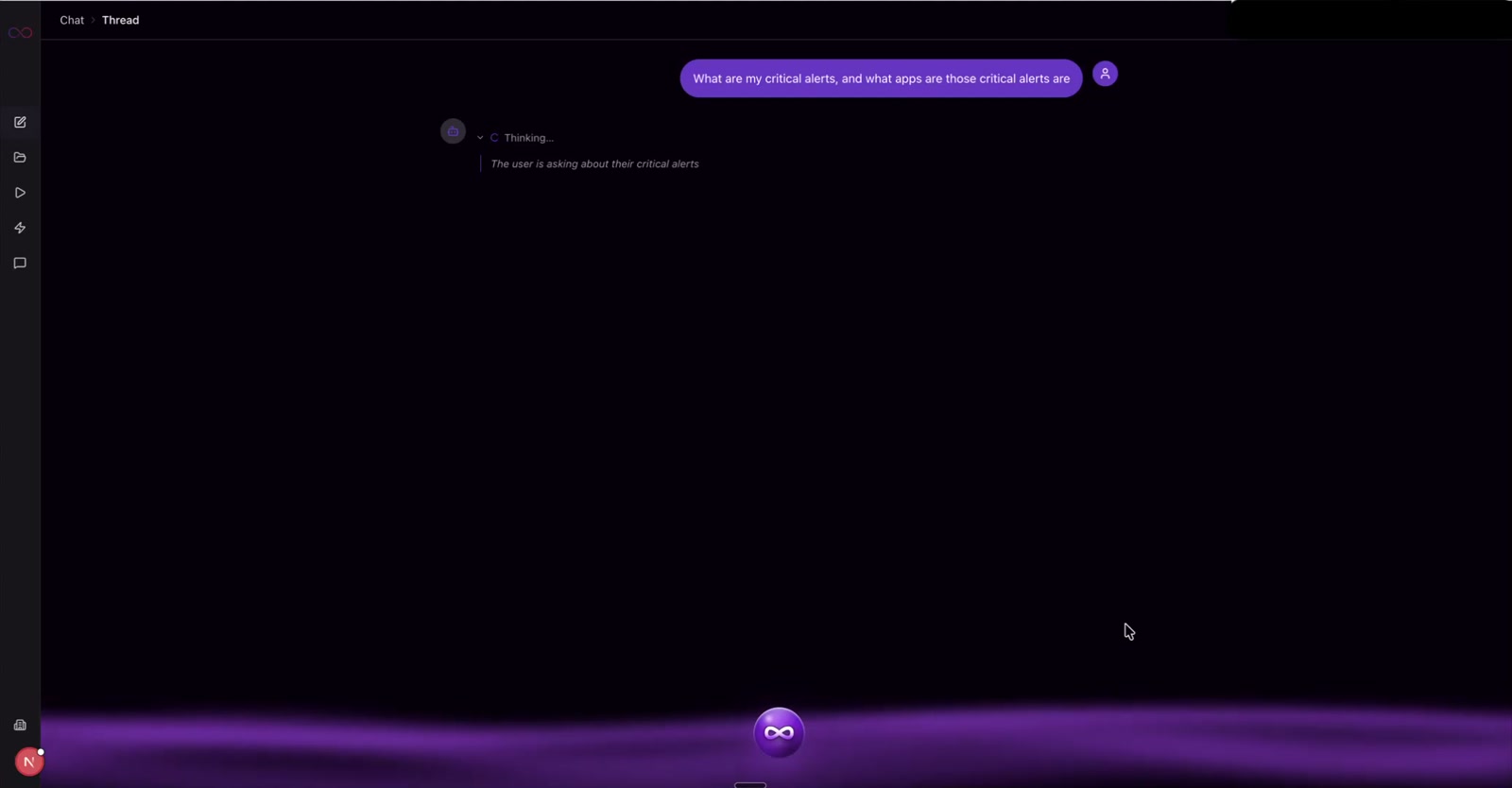
"Show me all critical alerts in the last 2 hours and cluster them by shared identity, host, and API activity."
"Find the likely root cause pattern and explain what changed before the spike."
"Give me the top two entities to prioritize and why."
System reasoning summary
Transilience AI correlates:
- Temporal alignment across alerts
- Shared principal and asset paths
- Preceding control drift and suspicious behavior
- Confidence-ranked causal hypotheses
It then condenses the chain into a short causal narrative the analyst can validate quickly.
Actionable decision output
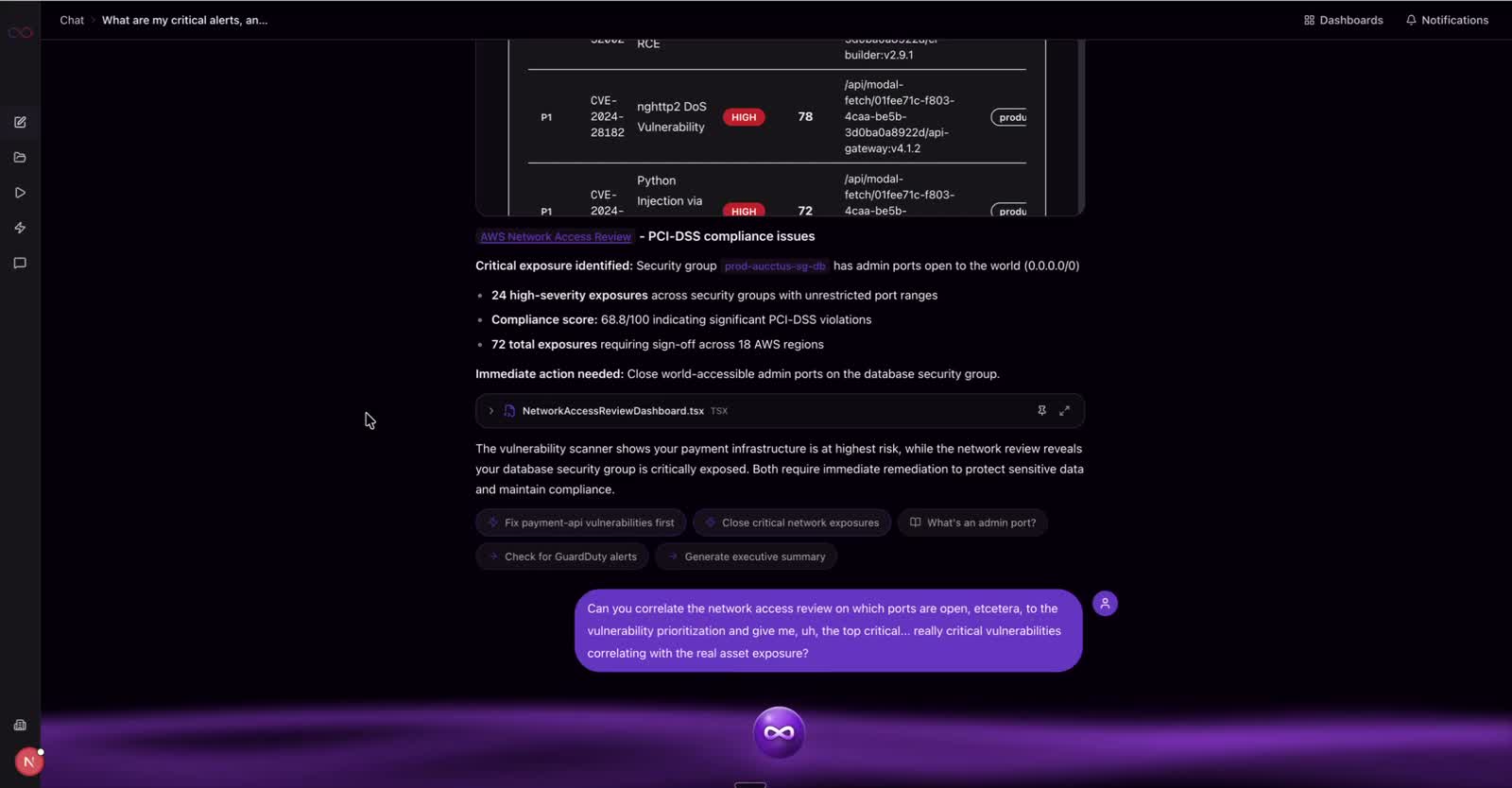
The platform returns a prioritized decision brief:
- Primary suspected root cause and confidence
- Top one or two people/assets to prioritize first
- Immediate containment and verification checks
This replaces ad-hoc triage with a deterministic first move.
Follow-up loop
The analyst then asks for closure checks through voice:
"Check whether the user complaints map to this same incident path."
"Run a validation test against the suspected control break and confirm if it still reproduces."
Transilience AI feeds the result back into the incident timeline so next actions stay grounded in evidence.