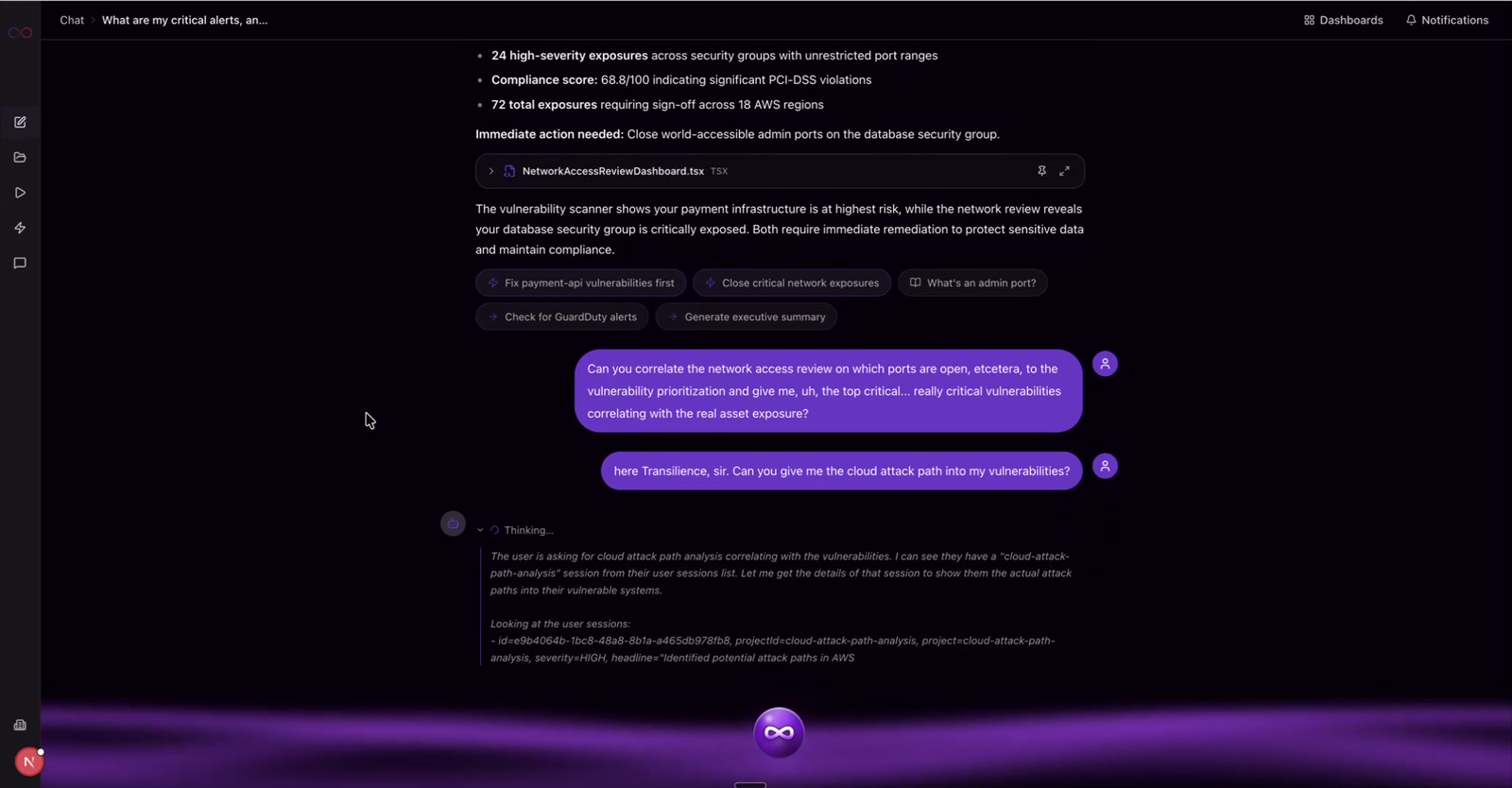
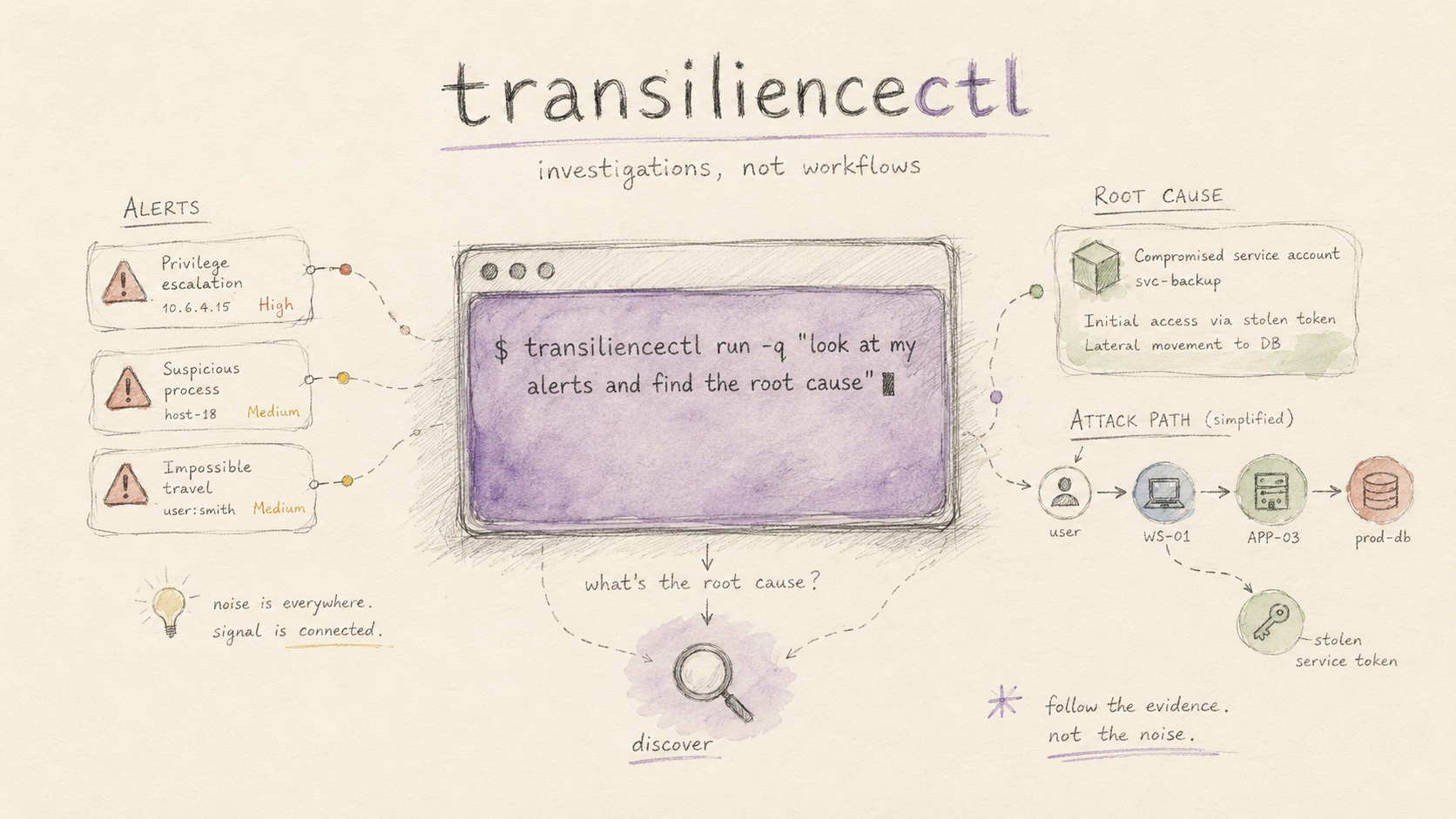
Attack path analysis is high-value and high-friction. Analysts usually lose time stitching identity, asset, and exposure context manually.
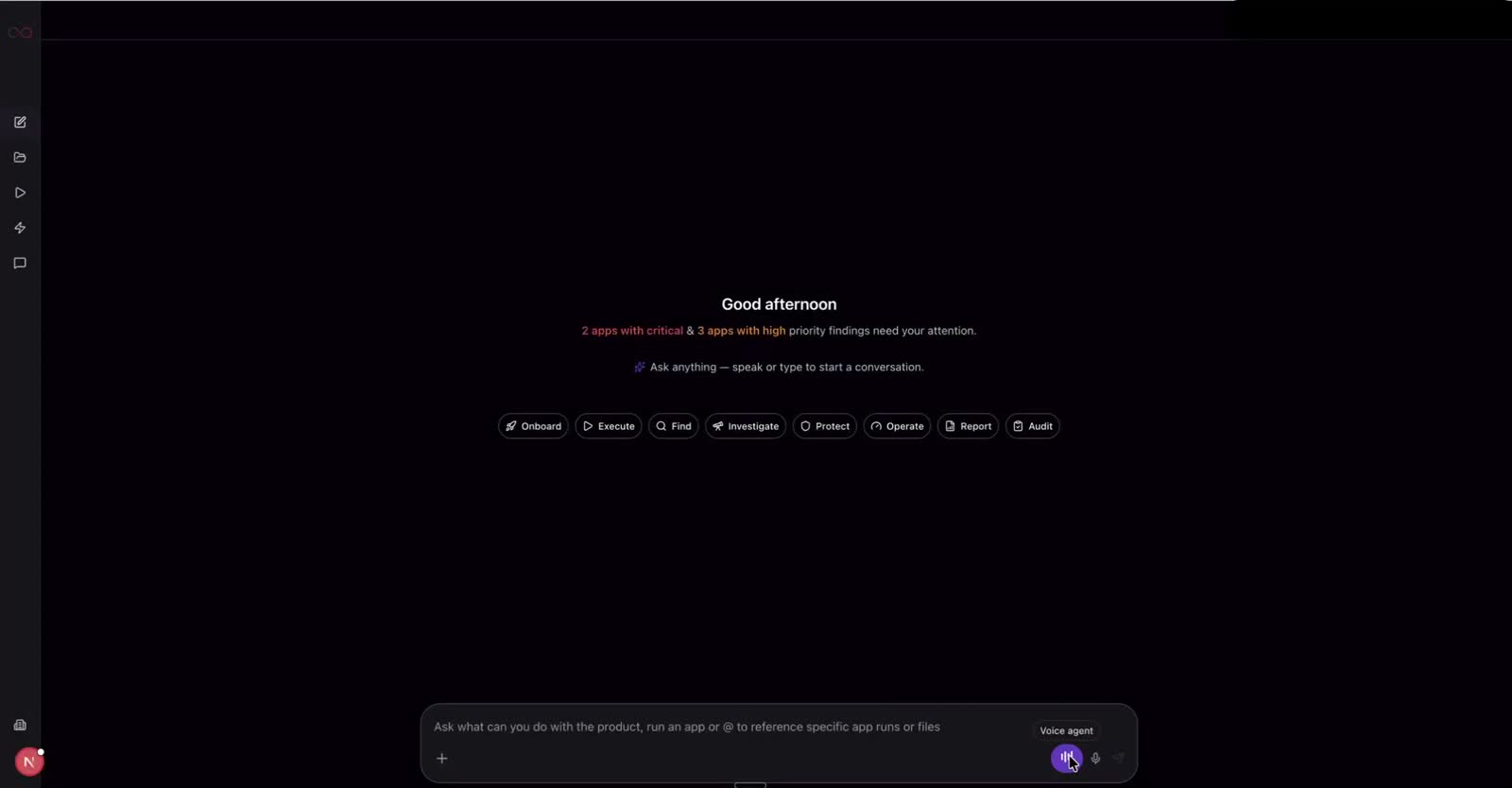
This workflow shows how voice chat makes path reconstruction immediate.
Analyst context and trigger
An alert suggests lateral movement risk. The analyst needs to understand the shortest viable attack path and the first break-point to stop progression.
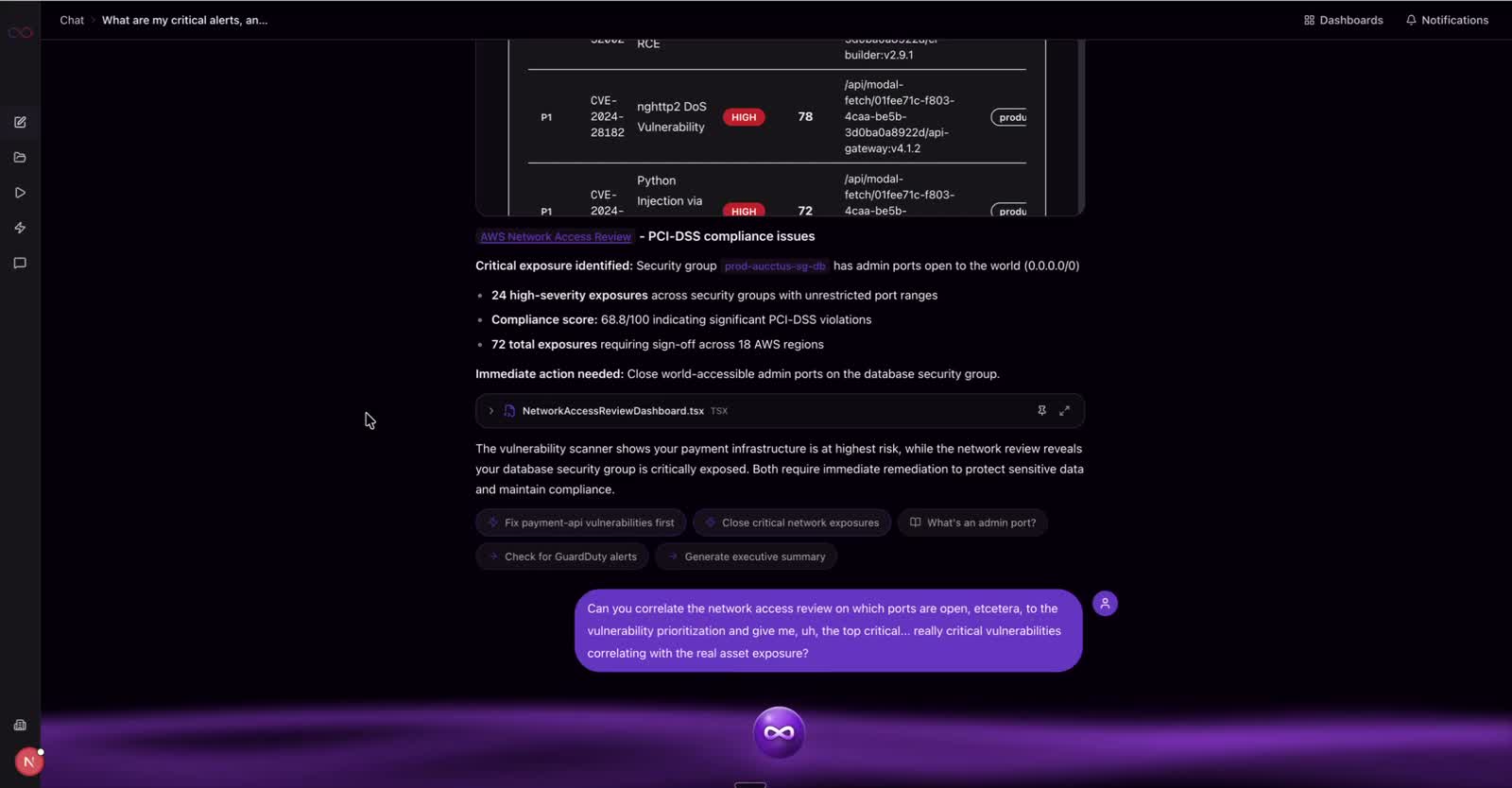
Voice prompt sequence
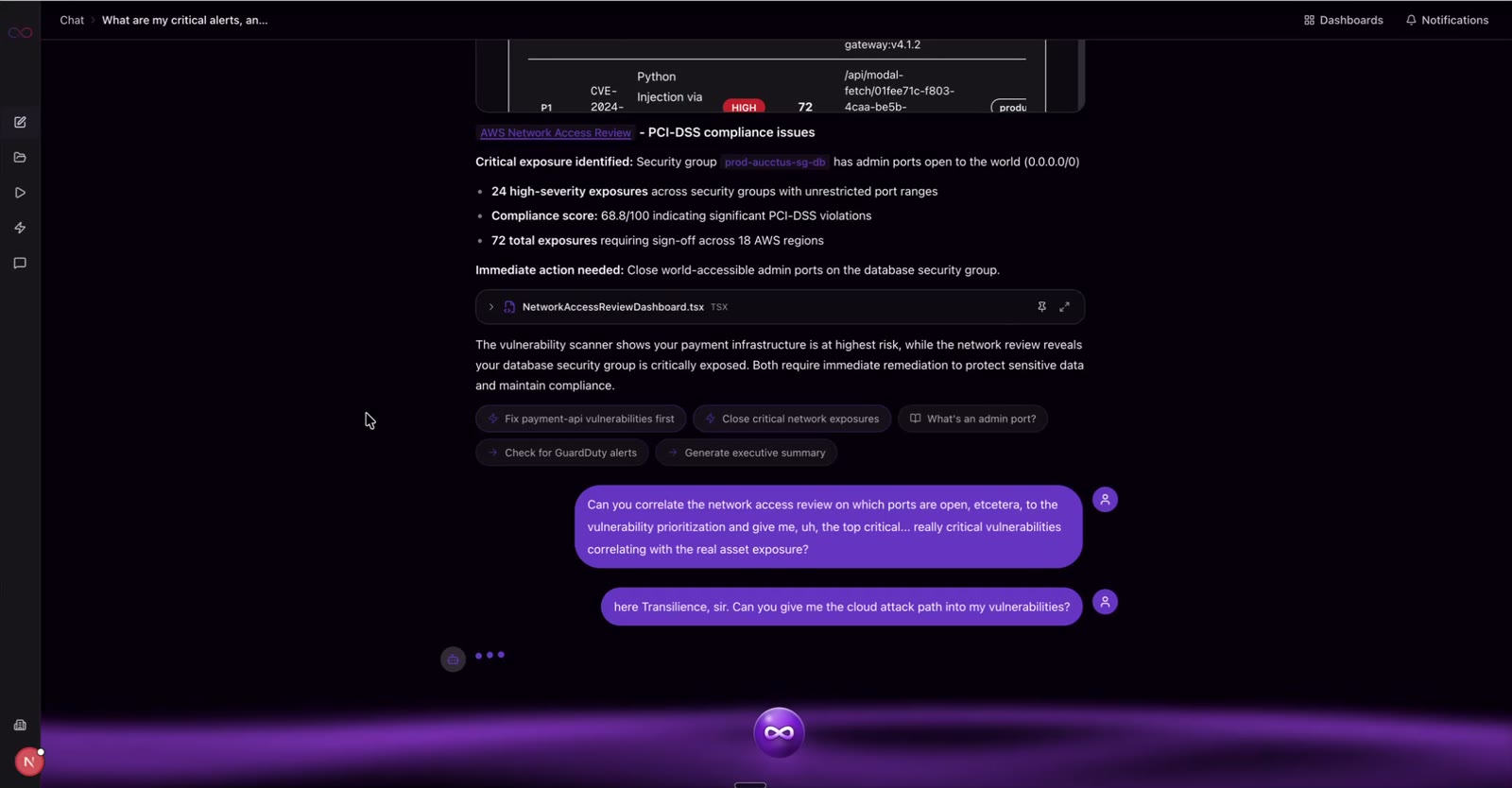
The analyst runs path analysis conversationally:
"Build the likely attack path from initial foothold to critical asset exposure."
"Which node is the highest-leverage intervention point right now?"
"Who should I prioritize first to execute the fix path?"
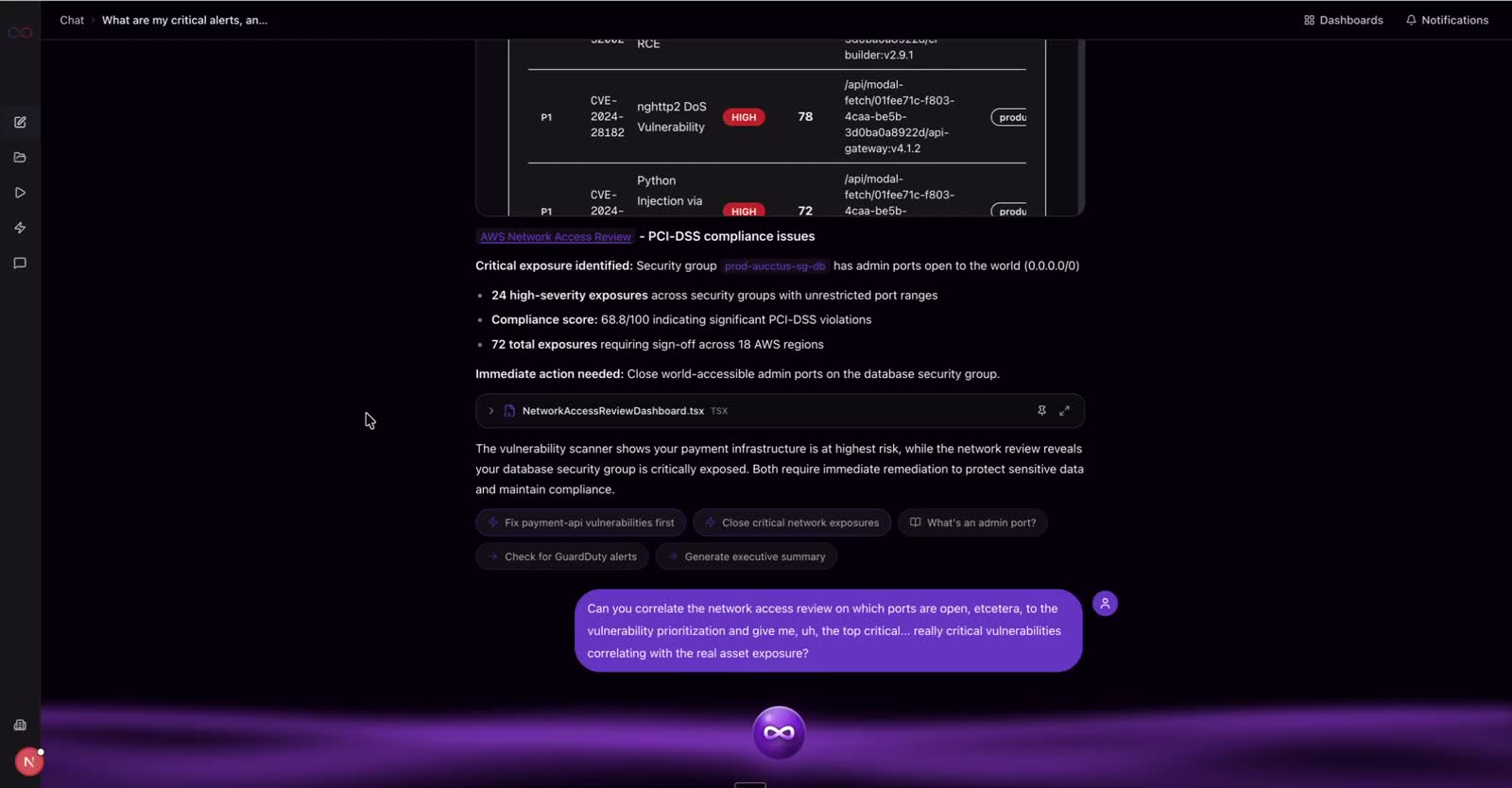
System reasoning summary
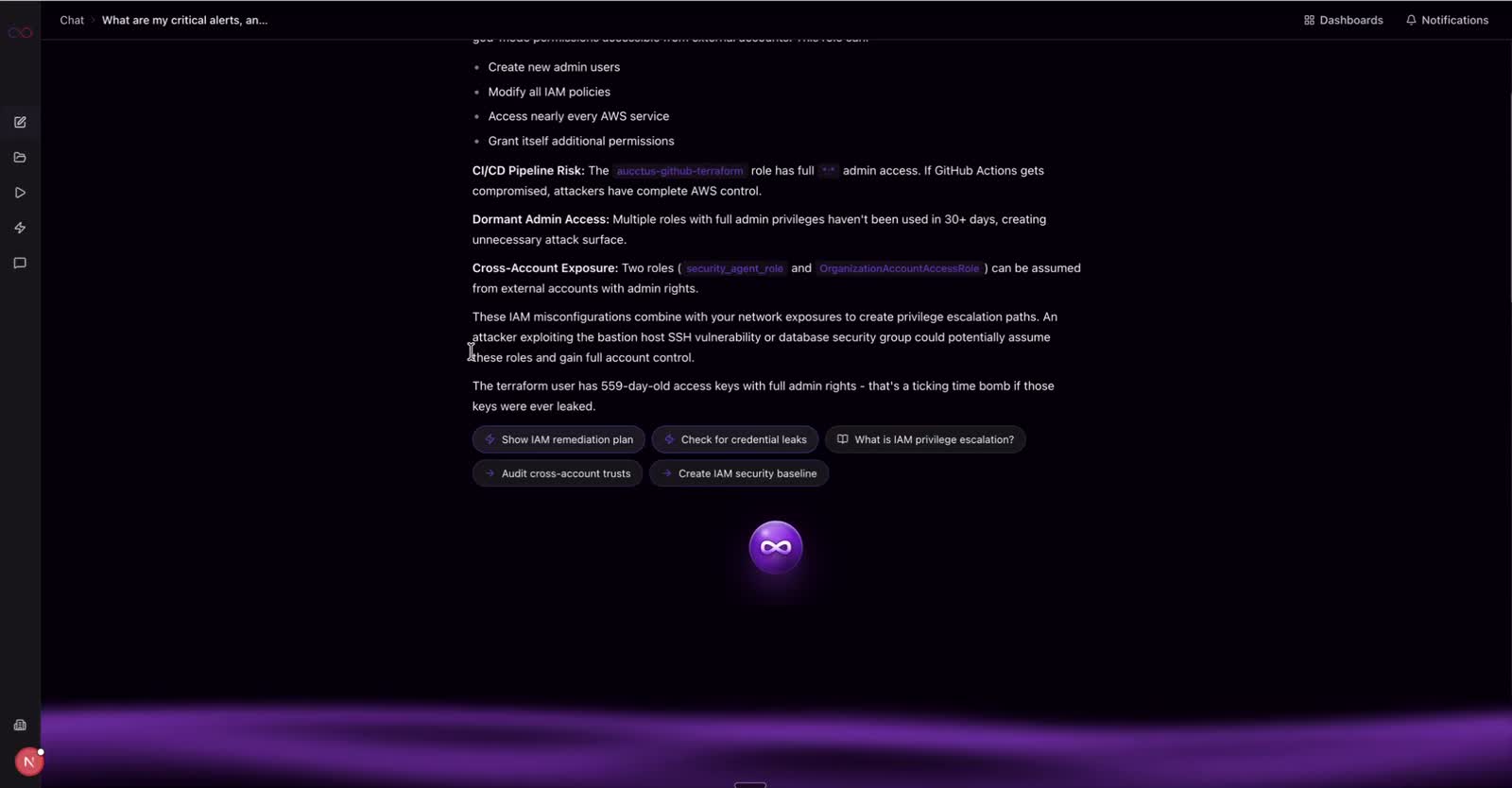
Transilience AI evaluates permissions, trust relationships, vulnerability state, and observed behavior to provide:
- Probable entry path
- Escalation sequence
- Blast-radius estimate
- Confidence-ranked root cause branch
Actionable decision output
The analyst receives a path-focused priority plan:
- Immediate break-point control change
- Top 1–2 owners required for execution
- Verification checks to confirm attack path disruption
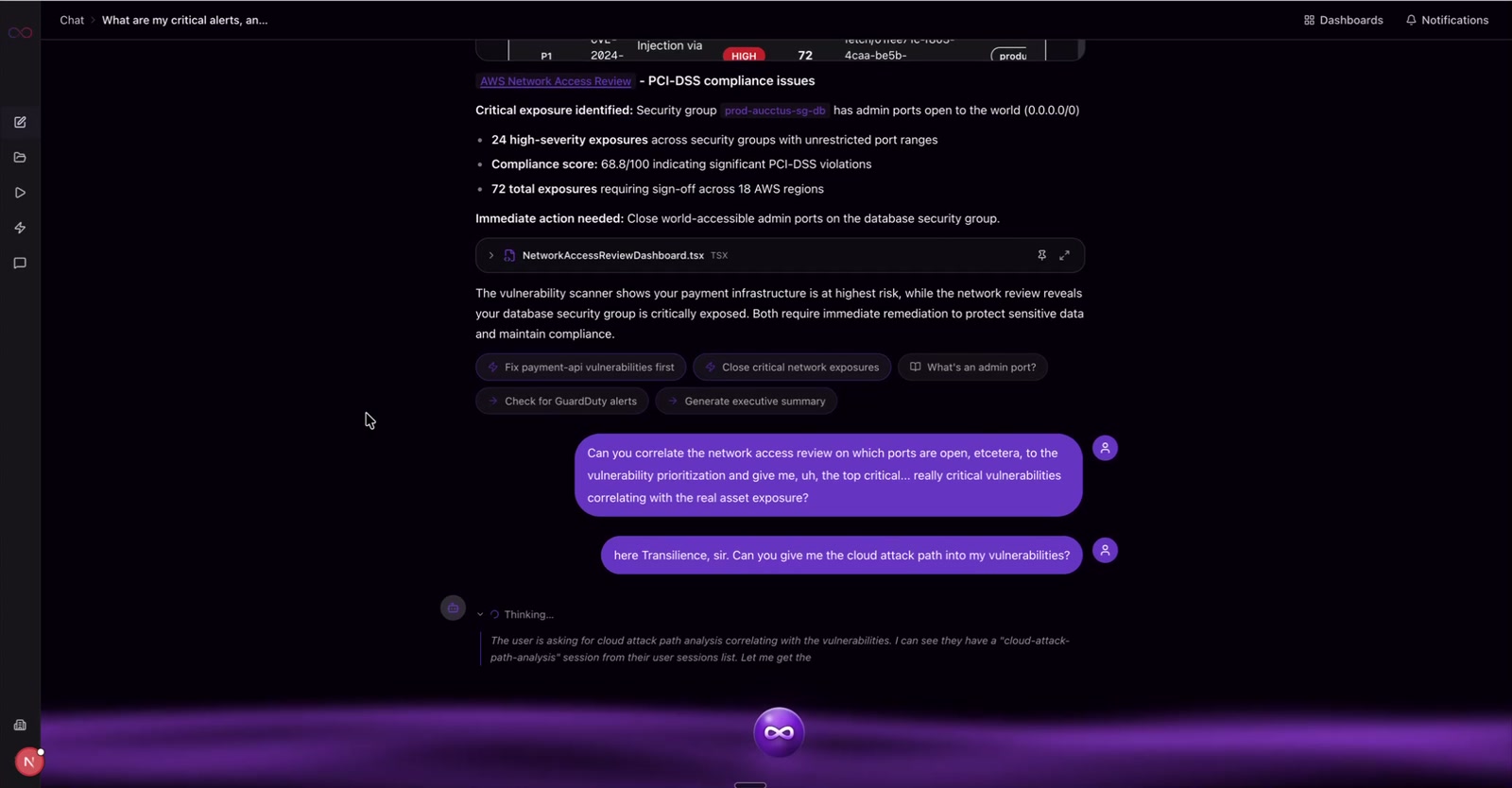
Follow-up loop
To validate closure, the analyst asks:
"Run a test to see if the attack path still resolves after the control update."
"Check whether any current complaints align with this path and need parallel handling."
Transilience AI returns a pass/fail path status and any residual risk branches.