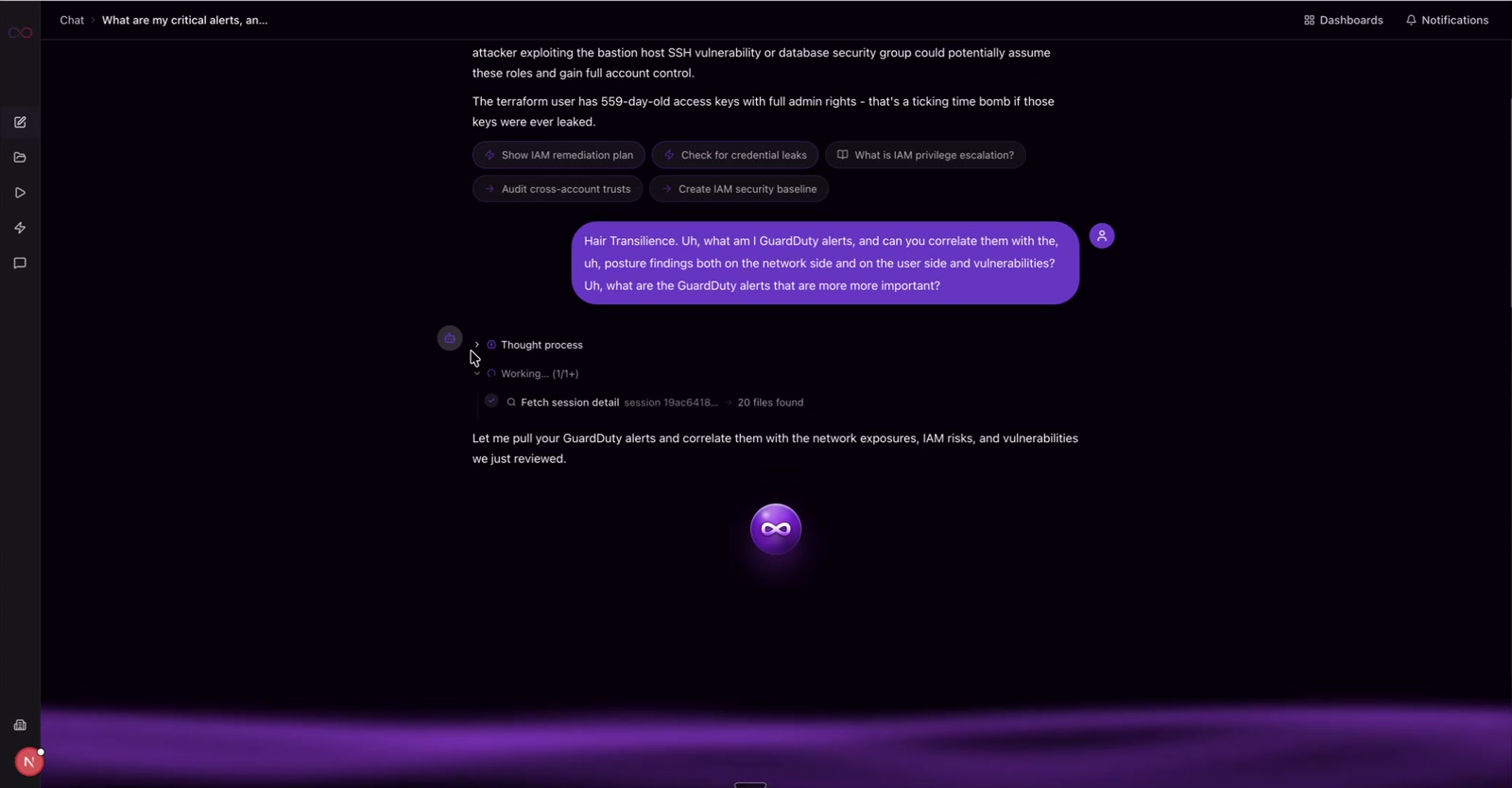
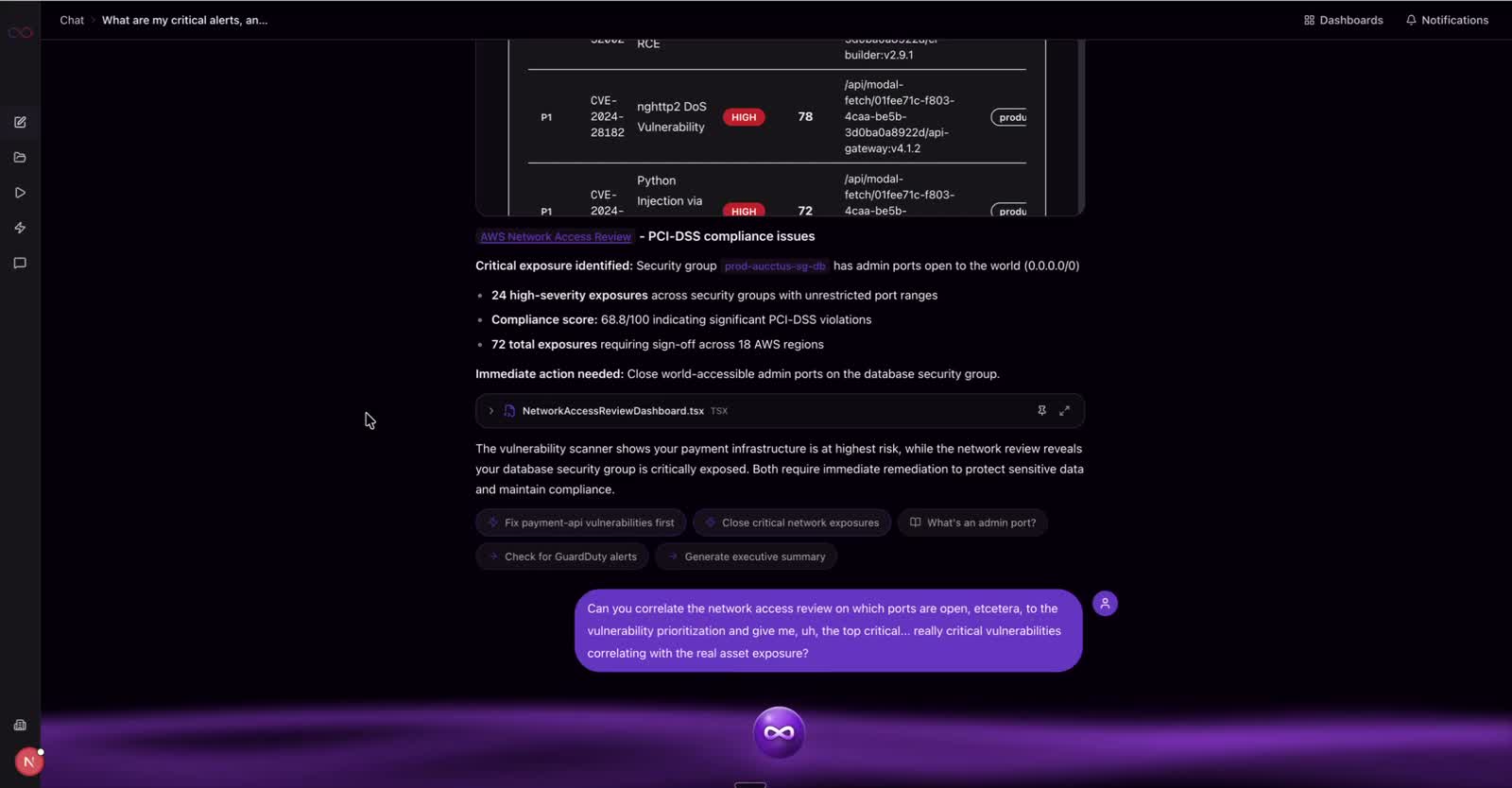
GuardDuty findings are valuable, but volume and uneven quality can bury the real priority work.
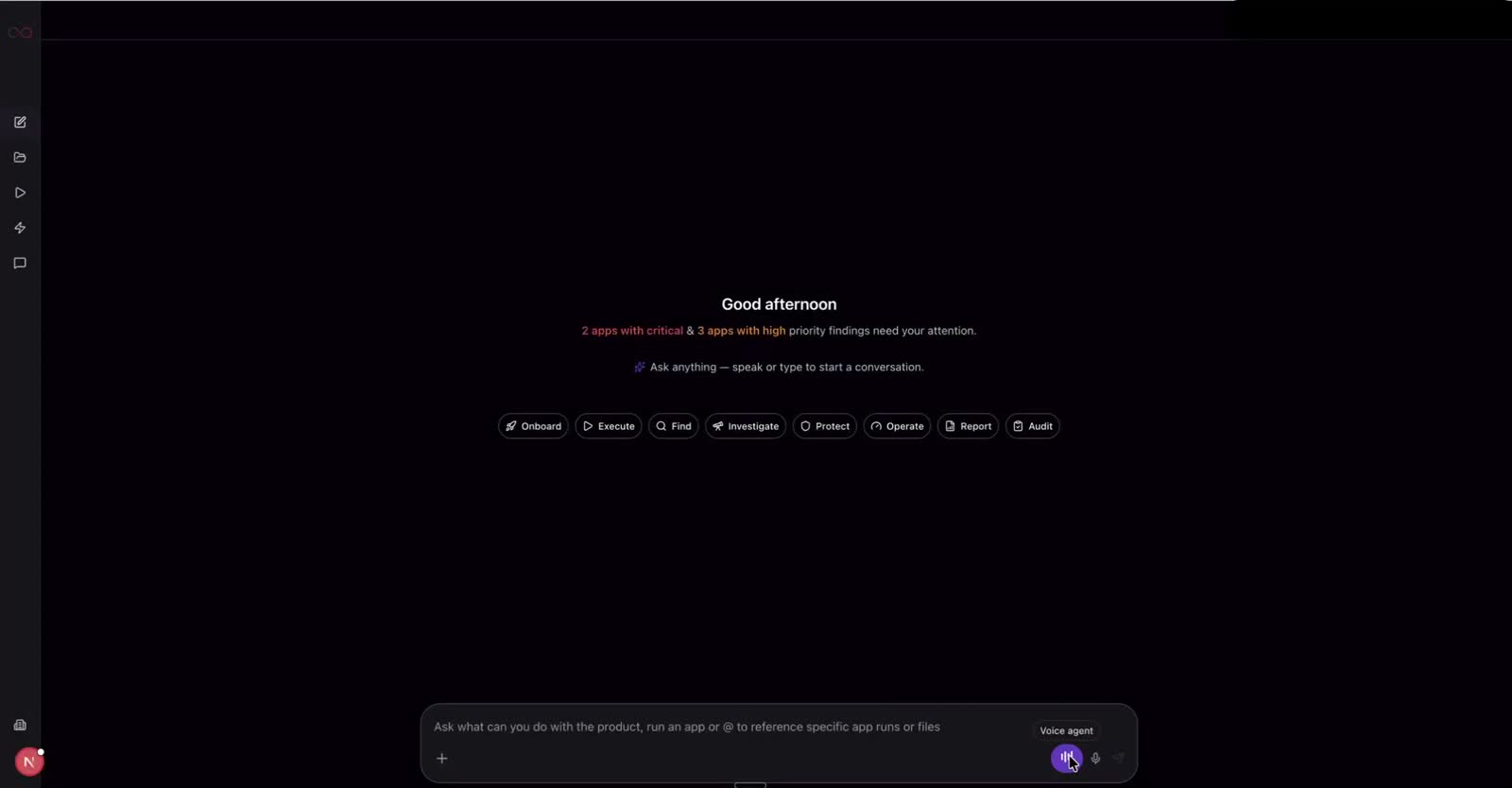
Voice chat lets analysts ask for ranking, rationale, and next action in one loop.
Analyst context and trigger
A new batch of GuardDuty findings appears with mixed severities. The analyst needs to isolate what matters now and avoid spending cycles on low-impact noise.
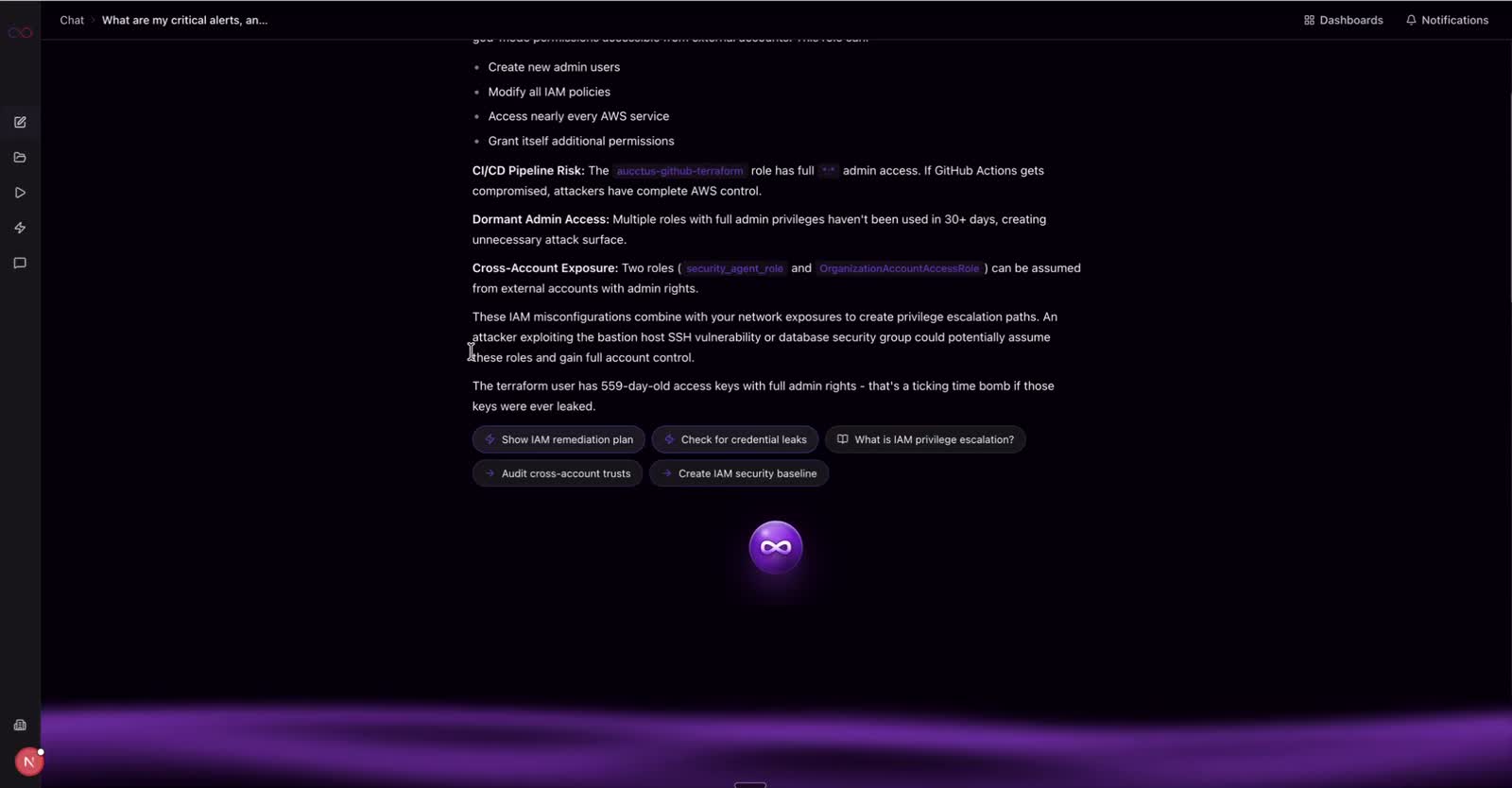
Voice prompt sequence
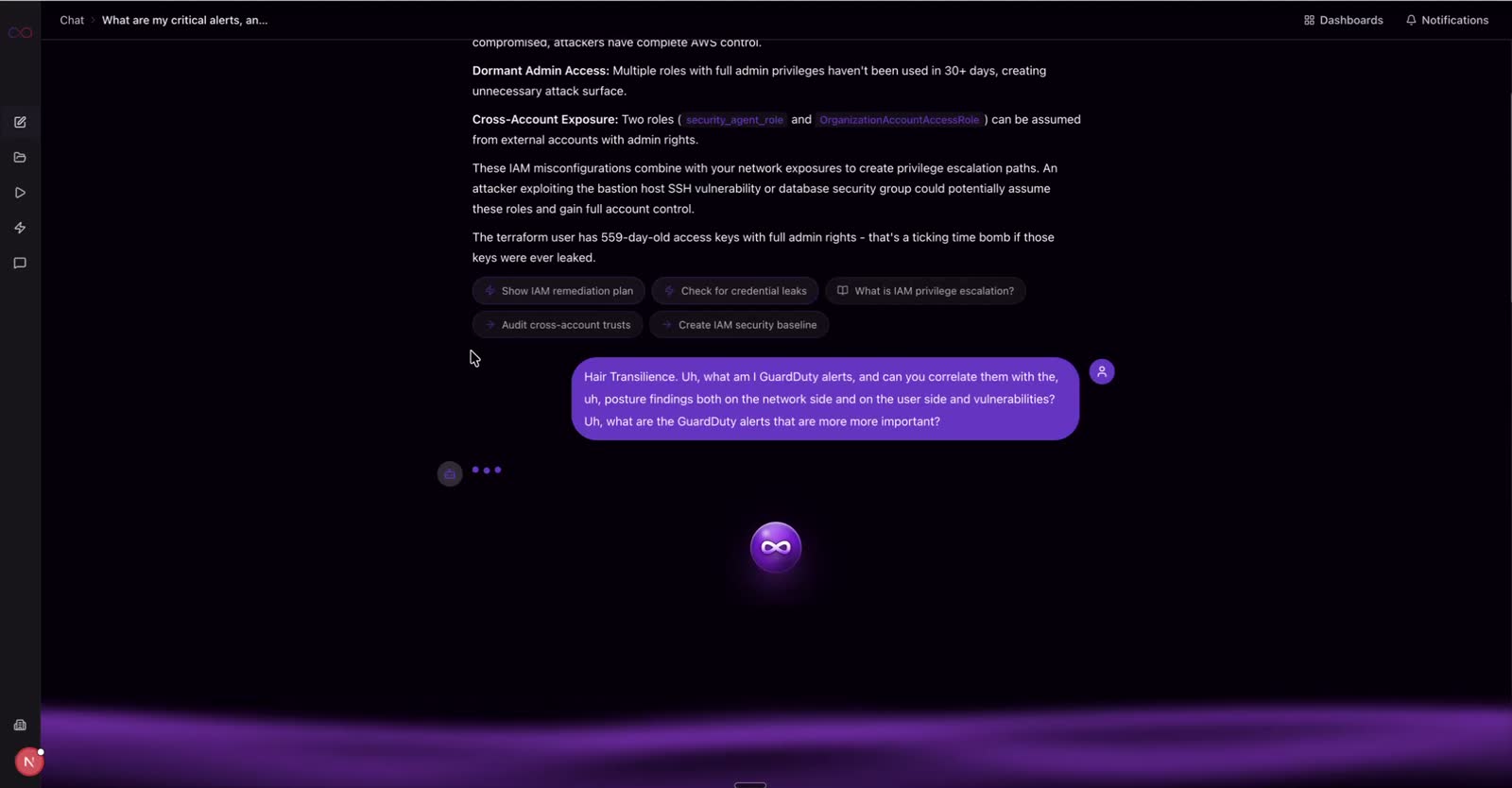
The analyst asks:
"Rank current GuardDuty alerts by business impact and exploit likelihood."
"Which one or two owners should I pull in first for the top finding?"
"Explain root cause indicators for the highest-priority alert."
System reasoning summary
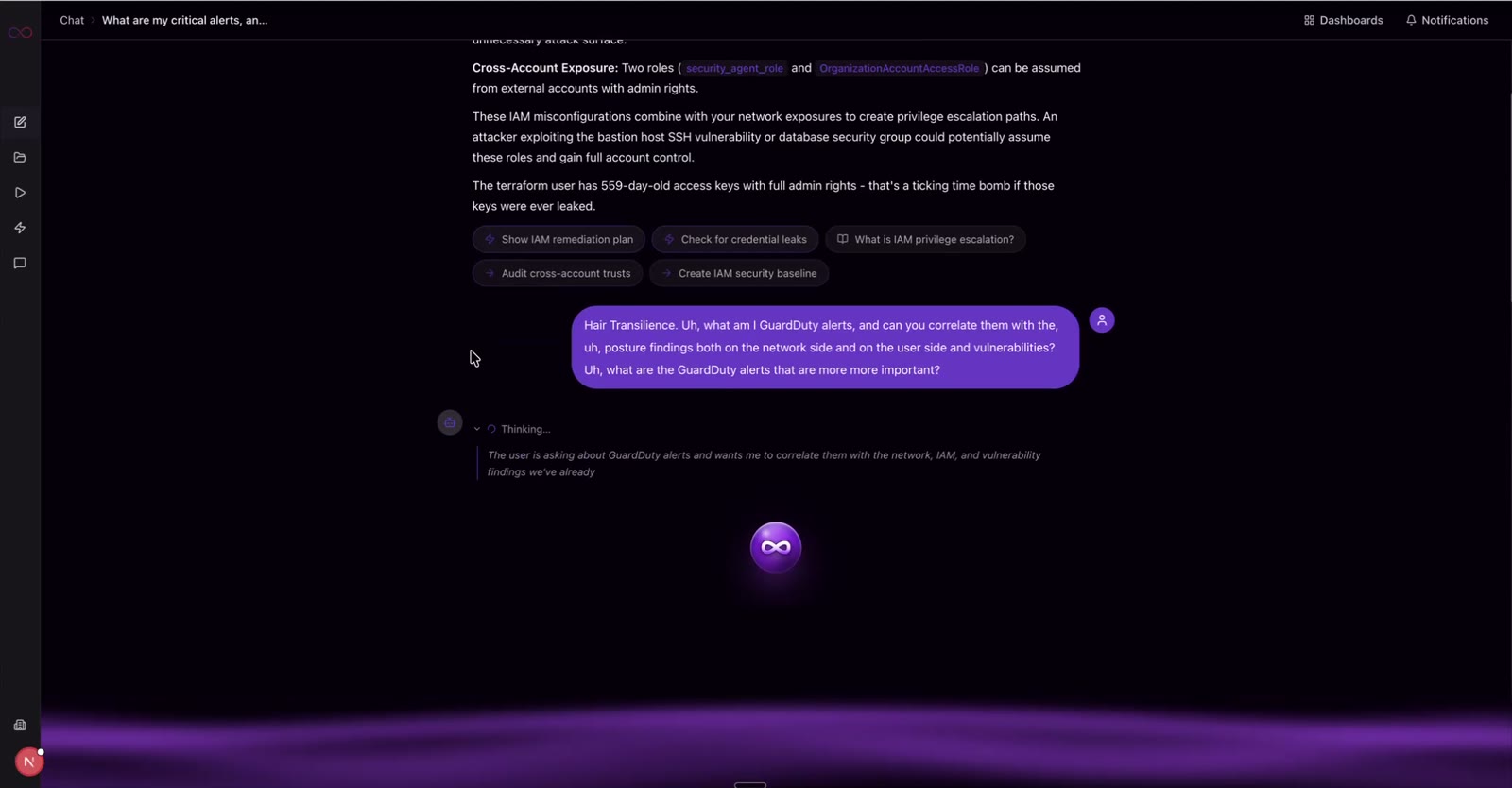
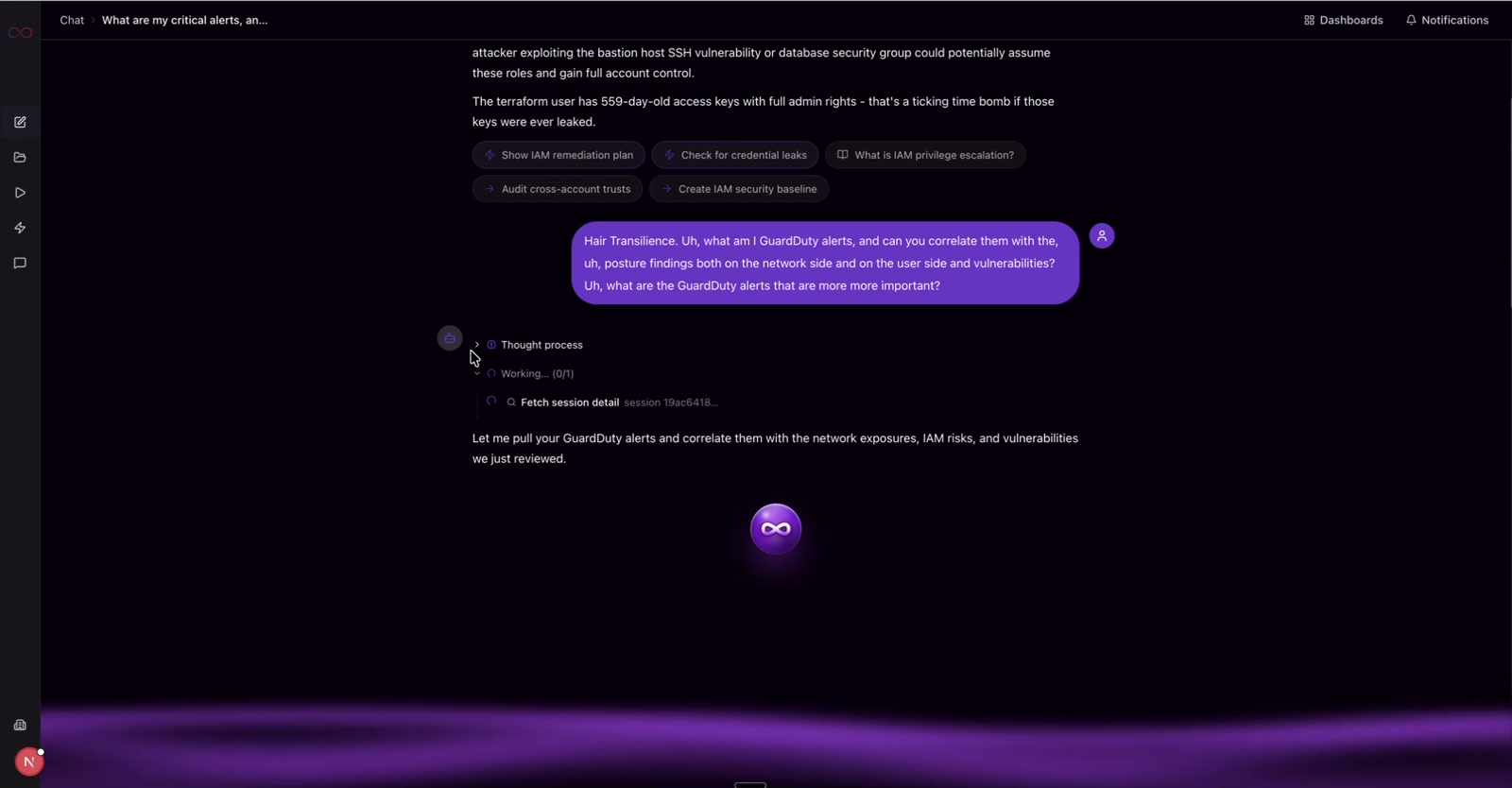
Transilience AI correlates GuardDuty signals with account criticality, identity paths, data sensitivity, and recent change activity, then produces:
- Priority-ranked alert stack
- Root cause clues
- Confidence and urgency level
Actionable decision output
The analyst gets a concise execution plan:
- First alert to handle now
- First people to involve
- Immediate checks and containment steps
This prevents queue-order triage and keeps decisions impact-first.
Follow-up loop
The analyst confirms progress through voice:
"Check if user complaints match this alert timeline or scope."
"Run a verification test after containment and tell me if risk has dropped."
Transilience AI tracks closure state and flags anything still requiring escalation.